
Living with Luna, my rescue cat, sometimes feels like having a roommate from another planet. One minute she is sleeping like an angel, and the next, she is sprinting across the apartment at 3 AM staring at invisible ghosts.
For a long time, I just assumed she was “a little crazy.” But after diving into animal ethology (the study of animal behavior) for CatTrove, I realized that every single “weird” thing she does has a biological purpose. She isn’t crazy; she is just being a cat.
If you have ever wondered why your cat acts like a weirdo, here are the scientific reasons behind 6 common behaviors I used to misunderstand.
Related Post: My Cat’s Itching Nightmare: How I Found the Right Cat Skin Allergies Treatment After Months of Failure
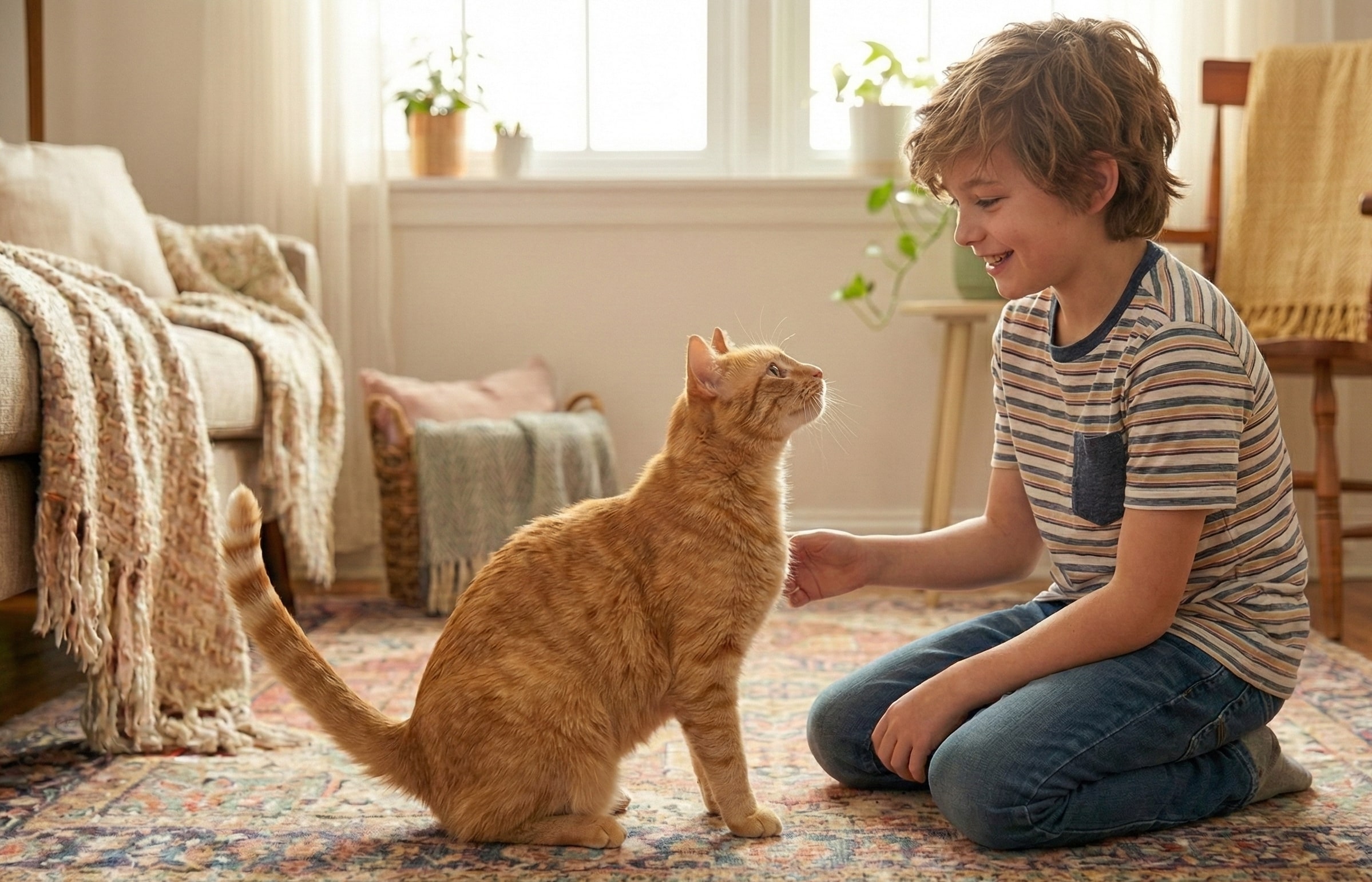
1. The Head Bunting: The “Aggressive” Love Note
My Experience: I’ll be deep in focus working at my desk when—BONK! Luna jumps up and slams her forehead into my chin or cheek. It’s forceful enough to almost knock my glasses off. At first, I thought she was trying to push me out of her chair.
The Science: In the cat world, this is called “Bunting.” Cats have scent glands located on their temples, cheeks, and chins. When they rub or bonk their head against you, they are performing a vital social ritual: Scent Marking.
- It’s not an attack; it’s ownership. In the wild, cats in the same colony rub heads to create a “communal scent.” By bunting you, your cat is effectively saying, “This human is mine. They are safe, and they belong to my tribe.”
- My Solution: I don’t push her away. Instead, I lower my head and gently bump my forehead against hers. It’s our secret handshake.
2. The Slow Blink: A Silent “I Love You”
My Experience: Early on, I made the mistake of staring directly into Luna’s eyes to “connect” with her. She would immediately flatten her ears and look away. I didn’t know that in animal language, prolonged eye contact is a threat.
The Science: According to a 2020 study in Scientific Reports, the Slow Blink is the most effective way to communicate friendship to a cat.
- The Mechanism: Because cats are both predators and prey, closing their eyes in the presence of another being is the ultimate sign of trust. It means they are lowering their guard. If a cat looks at you and slowly closes their eyes, it is the feline equivalent of a kiss.
- My Solution: Now, whenever I catch Luna looking at me, I relax my face and blink in slow motion. 90% of the time, she blinks back. It is a magical moment of connection without saying a word.
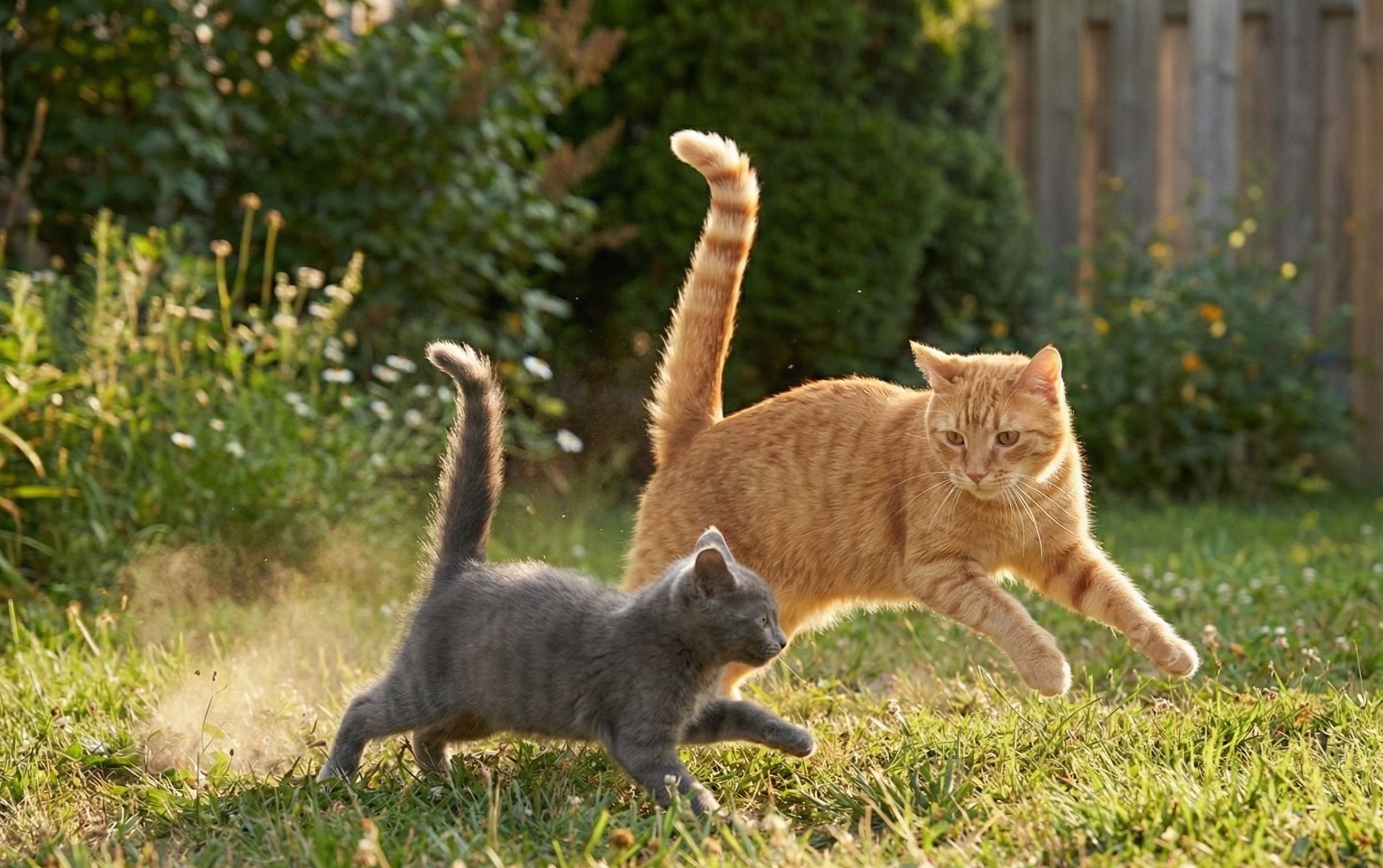
3. The 3 AM Zoomies: The Midnight Parkour
My Experience: It’s 3:00 AM. The house is silent. Suddenly—THUMP! CRASH! Luna sprints from the living room to the bedroom, bounces off the walls, jumps on my stomach, and drifts around the corner like a race car. Her pupils are dilated, and she looks possessed.
The Science: Vets call this FRAPs (Frenetic Random Activity Periods), commonly known as “The Zoomies.”
- The Cause: House cats sleep 12-16 hours a day. That is a lot of stored energy. Unlike humans, cats are crepuscular (active at dawn and dusk). However, indoor cats often have their circadian rhythms thrown off, leading to explosive bursts of energy at night to release pent-up hunting instincts.
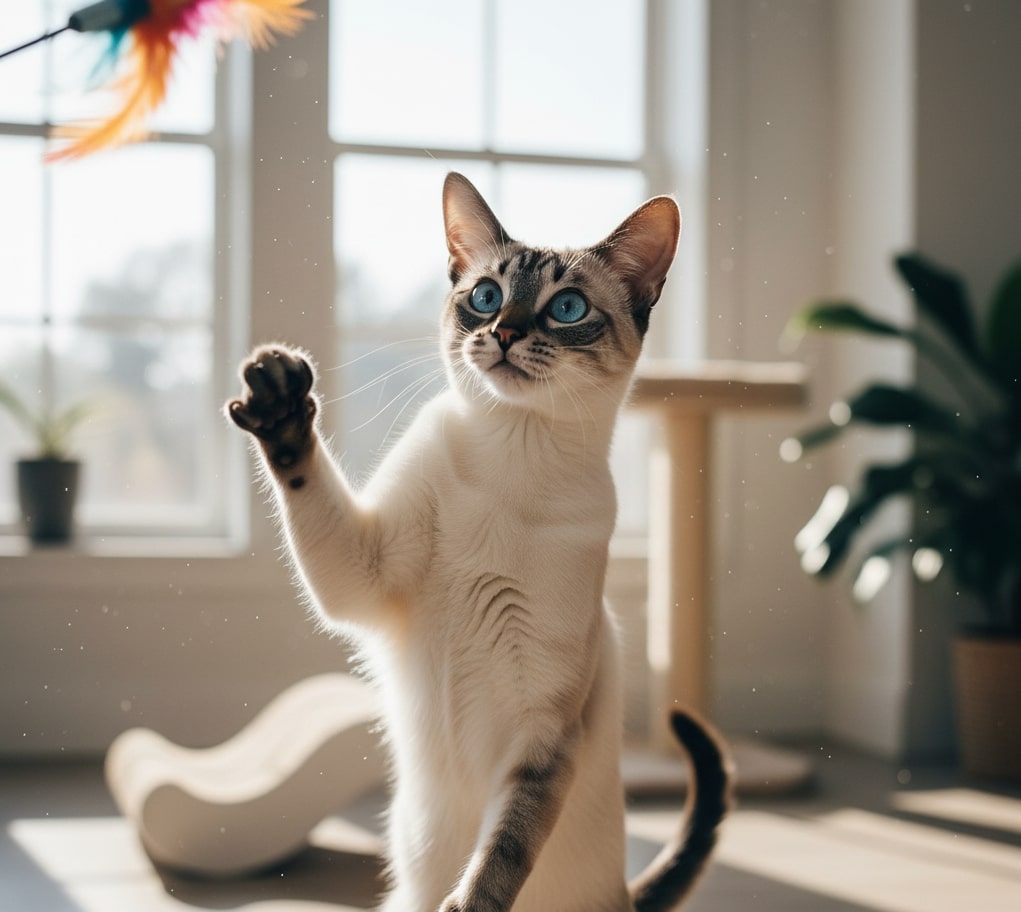
- My Solution: Shouting doesn’t work. Instead, I schedule a rigorous 15-minute Play Session with a wand toy right before bed. The routine is: Hunt (Play) -> Eat (Snack) -> Groom -> Sleep. It works like a charm.
4. The Window Chatter: “Kek-Kek-Kek”
My Experience: When Luna spots a sparrow on the balcony railing, her jaw starts vibrating rapidly. She makes a strange, clicking sound—“ek-ek-ek”—that sounds nothing like a normal meow.
The Science: Behaviorists have two main theories for this Chattering:
- Frustration: She sees the prey, she wants the prey, but the glass window is stopping her. It is pure physiological excitement mixed with irritation.
- Kill Bite Mimicry: Some scientists believe the jaw movement mimics the specialized “neck bite” wild cats use to sever the spinal cord of their prey quickly. It’s her inner assassin taking over on autopilot.
5. The Gravity Check: Knocking Things Over
My Experience: I can’t tell you how many water glasses, keys, and lipsticks have “flown” off my table. The script is always the same: Luna jumps up, looks at the cup, looks at me, taps it gently… and then SMACK. Down it goes. She watches it shatter with zero remorse.
The Science: She isn’t doing it to be a jerk (mostly).
- The Hunting Instinct: A cat’s paw pads are highly sensitive. In the wild, they tap objects to check: Is it alive? Will it run? Is it dangerous? Your cup didn’t move, so she tapped it harder until it did.
- Attention Seeking: Cats are smart. They learn cause and effect fast: “When I drop this, the human looks at me immediately.” For a bored cat, negative attention (you yelling) is better than no attention.
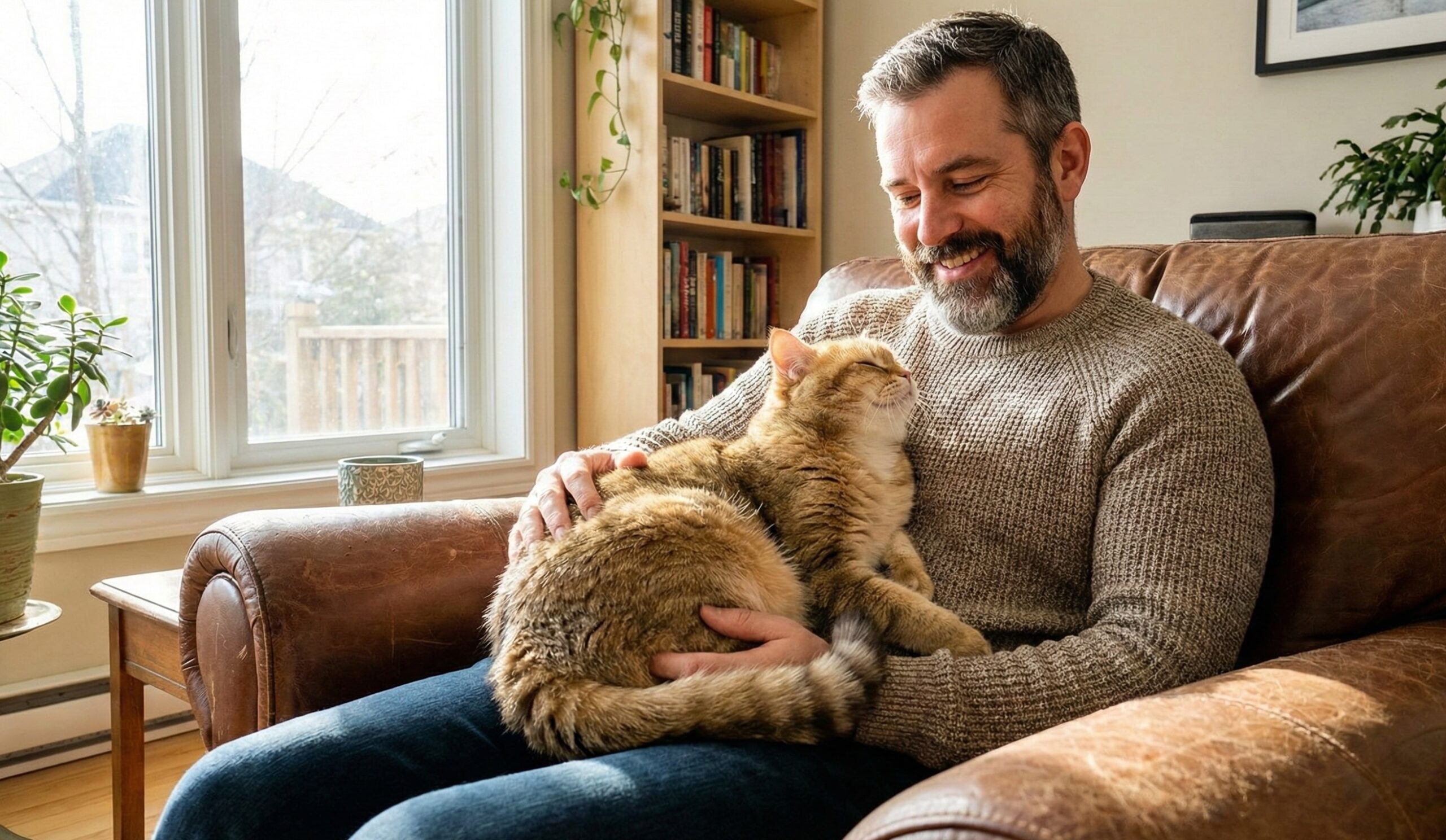
6. The Box Obsession: “I Fits, I Sits”
My Experience: I once spent $50 on an orthopedic, self-heating plush bed for Luna. I unboxed it excitedly. The Result: She sniffed the expensive bed for 3 seconds, then jumped into the dirty Amazon cardboard box it came in and fell asleep. I felt betrayed.
The Science: Why do cats prefer trash over treasure?
- Stress Reduction: A study from Utrecht University proved that shelter cats provided with boxes recovered from stress faster. The box is a “Safe Zone” where they can hide and observe the world without being ambushed from behind.
- Thermoregulation: A cat’s ideal temperature is 86-97°F (much warmer than humans prefer). Corrugated cardboard is an excellent insulator. Curling up in a tight box helps them retain body heat much better than an open bed.
Conclusion: Embracing the “Weird”
Understanding cat behavior is the key to a happy multi-species household. These seemingly “crazy” actions are actually signs that your cat is healthy and following their natural instincts.
Once I stopped getting annoyed and started asking “Why?”, my relationship with Luna changed. I realized she wasn’t knocking my cup over because she hated me; she was just bored. She wasn’t ignoring me; she was slow-blinking. Learning this language has turned us from roommates into best friends.
Frequently Asked Questions (FAQ)
Cats have superior senses. They can hear high-frequency sounds (like pipes creaking or mice in the walls) and see UV light that humans can’t. They aren’t seeing ghosts; they are just hearing or seeing things you are missing!
No, and this is important. Head Bunting is a gentle rub against you for affection. Head Pressing is when a cat presses their head hard against a wall or corner and holds it there. Head pressing is a medical emergency (often neurological) and requires a vet visit immediately.
It’s actually a polite handshake! In the cat world, sniffing tails is how they identify each other. By turning around and lifting their tail, your cat is showing they trust you enough to turn their back on you.
The best method is “management.” Keep breakable items off high surfaces. If they do it for attention, do not react. If you yell or pick it up immediately, you are rewarding them with attention. Ignore the bad behavior and reward them when they play with their actual toys.