
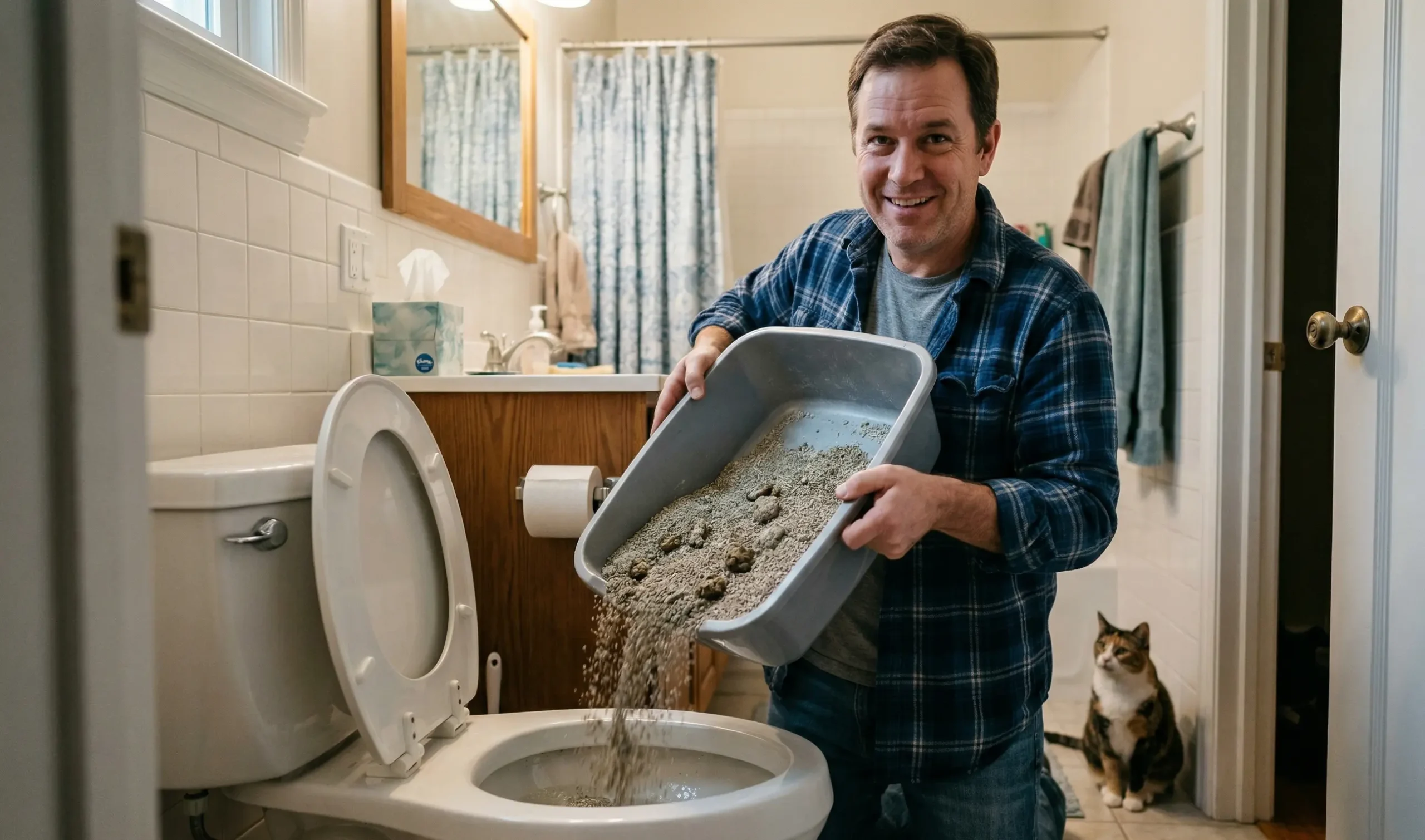
The short answer is no, you should generally not flush cat litter down the toilet in the United States. Even if the packaging claims it is “flushable,” most US plumbing systems—especially older residential lines—are not designed to handle the expanding nature of clay or the bulk of biodegradable materials. Furthermore, flushing cat waste poses a significant environmental risk due to Toxoplasma gondii, a parasite that municipal water treatment plants cannot effectively filter out.
At Cattrove, we advocate for safe and sustainable pet care. Below, we break down exactly why different types of litter behave the way they do in your pipes and why “flushable” isn’t always a green light.
Why Is Flushing Cat Litter Such a Risk for Your Home?
The primary issue isn’t just the “flush” itself; it’s what happens inside the pipes over time. To understand the risk, we need to look at the specific materials that make up your cat’s litter box.
1. Clay Litter (Sodium Bentonite)
This is the most common litter found in US households.
- The Science: Bentonite clay is designed to expand up to 15–20 times its original size when it contacts liquid to form a hard clump.
- The Risk: In your toilet, this creates a “cement-like” blockage. It settles in the “P-trap” of the toilet or the main sewer line, leading to massive backups that require professional hydro-jetting or pipe replacement. Verdict: Never flush.
2. Silica Gel (Crystal Litter)
Made from sodium silicate, these beads are highly porous and designed to “lock in” moisture and odor.
- The Science: While they don’t expand like clay, they are non-biodegradable.
- The Risk: These crystals do not break down in water. In homes with septic tanks, they add to the sludge layer, eventually killing the tank’s efficiency. In city sewers, they contribute to “fatbergs” and blockages. Verdict: Never flush.

3. Corn, Wheat, and Tofu (Plant-Based Litters)
These are often marketed as “flushable” because they are made from organic, biodegradable materials.
- The Science: These materials are water-soluble over long periods, but they still swell significantly upon initial contact with water.
- The Risk: US plumbing, especially in older East Coast or Mid-West homes, often has rough-surfaced cast iron pipes. These organic clumps can snag on pipe imperfections, harden, and create a dam that catches toilet paper and other debris. Verdict: Avoid flushing, especially in older homes.
4. Recycled Paper Pellets
Often used for cats with sensitive paws or post-surgery.
- The Science: Highly absorbent but very slow to break down.
The Risk: These pellets act like a sponge. If you flush multiple scoops, they will absorb the water in the bowl and the pipe, becoming a heavy, soggy mass that won’t move through the system. Verdict: Do not flush.
The Hidden Environmental Danger: Toxoplasmosis
Beyond the plumbing, there is a legal and environmental reason to keep litter out of the toilet. Many US states, including California, have specific warnings on litter packaging regarding Toxoplasmosis.
- Treatment Limitations: Most US municipal wastewater treatment plants are designed to kill human bacteria, not hardy parasites like Toxoplasma gondii found in cat feces.
- Marine Life Impact: When this treated water is discharged into the ocean, the parasite remains active. It has been directly linked to the deaths of sea otters and other marine mammals along the US coastline.
How to Responsibly Dispose of Litter in the US
If you can’t flush it, what should you do? At Cattrove, we recommend these three methods to keep your home clean and the environment safe:
- Biodegradable Waste Bags: Scoop the waste into small, compostable bags and dispose of them with your regular household trash.
- Litter Disposal Systems: Use products like the Litter Genie or Litter Champ to seal away odors for up to two weeks, reducing the frequency of trips to the outdoor bin.
- Local Ordinances: Check your local US municipality website; some cities have specific “green bin” programs that accept pet waste if it is separated from regular trash.
Final Thoughts
While “flushable” might sound convenient, the potential for a $5,000 plumbing bill and the risk to local wildlife makes it a poor choice for American cat owners. For more deep-dives into the best pet products and sustainable living tips, visit us at Cattrove.