
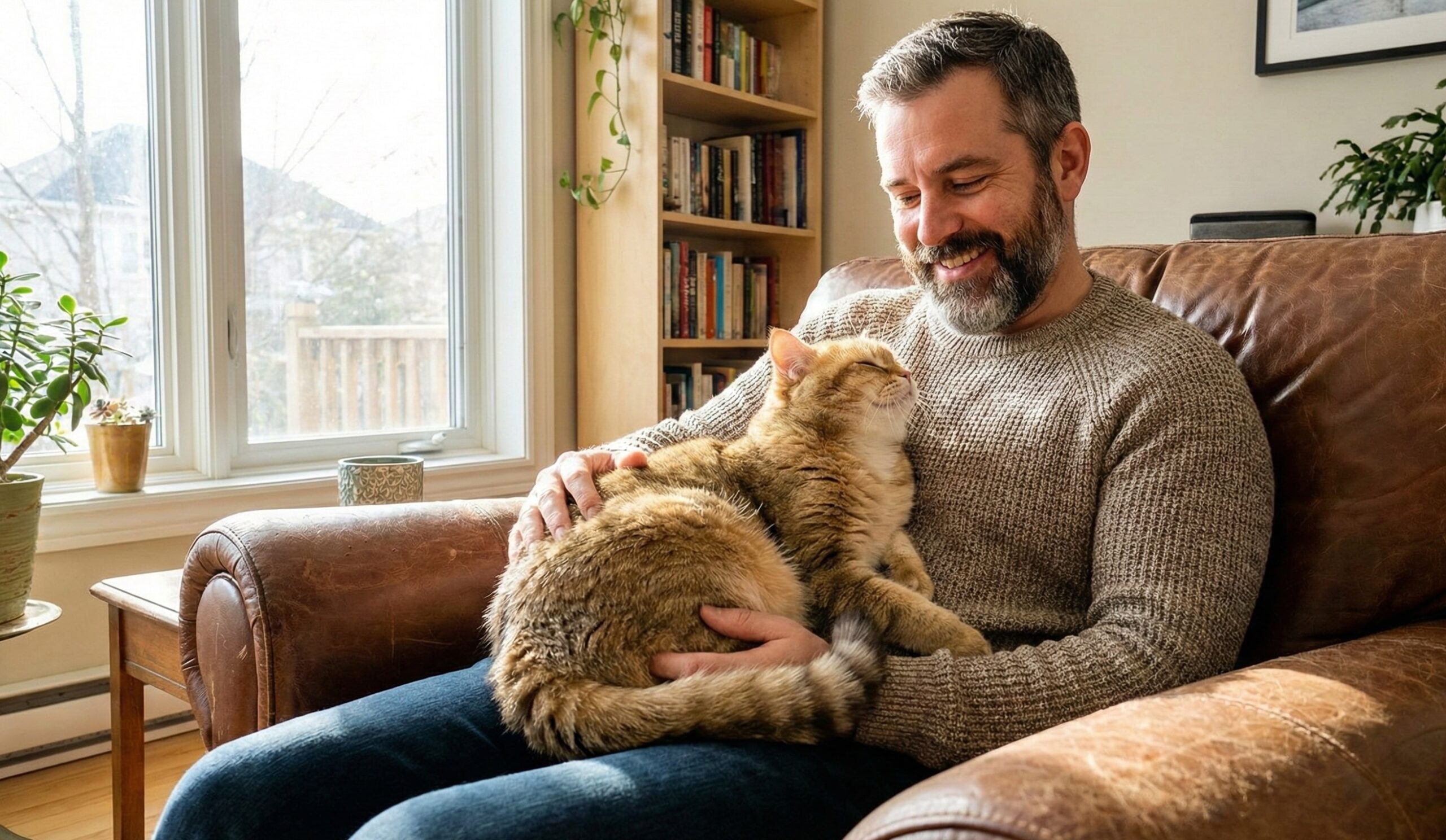
There is a secret guilt that many cat owners carry, but few talk about: that sinking feeling in your chest when you lock the door to head to work.
For a long time, I bought into the stereotype. I told myself, “Cats are independent. They sleep all day. Luna probably doesn’t even notice I’m gone.”
That mindset was convenient for me, but it was devastating for her. I unknowingly pushed my cat into a state of panic that I mistook for “bad behavior.”
Today, I want to share the story of how I discovered Luna had Separation Anxiety and how we fixed it. If you have ever come home to a destroyed sofa or a suspicious wet spot on your bed, this post is for you.
Related Post: Why Is My Cat Peeing Outside the Litter Box? Causes & Proven Fixes
1. The Incident: It Wasn’t “Revenge,” It Was a Cry for Help
My Experience: After two years of working from home, I was called back to the office. The first week seemed fine. But by week two, the “accidents” started.
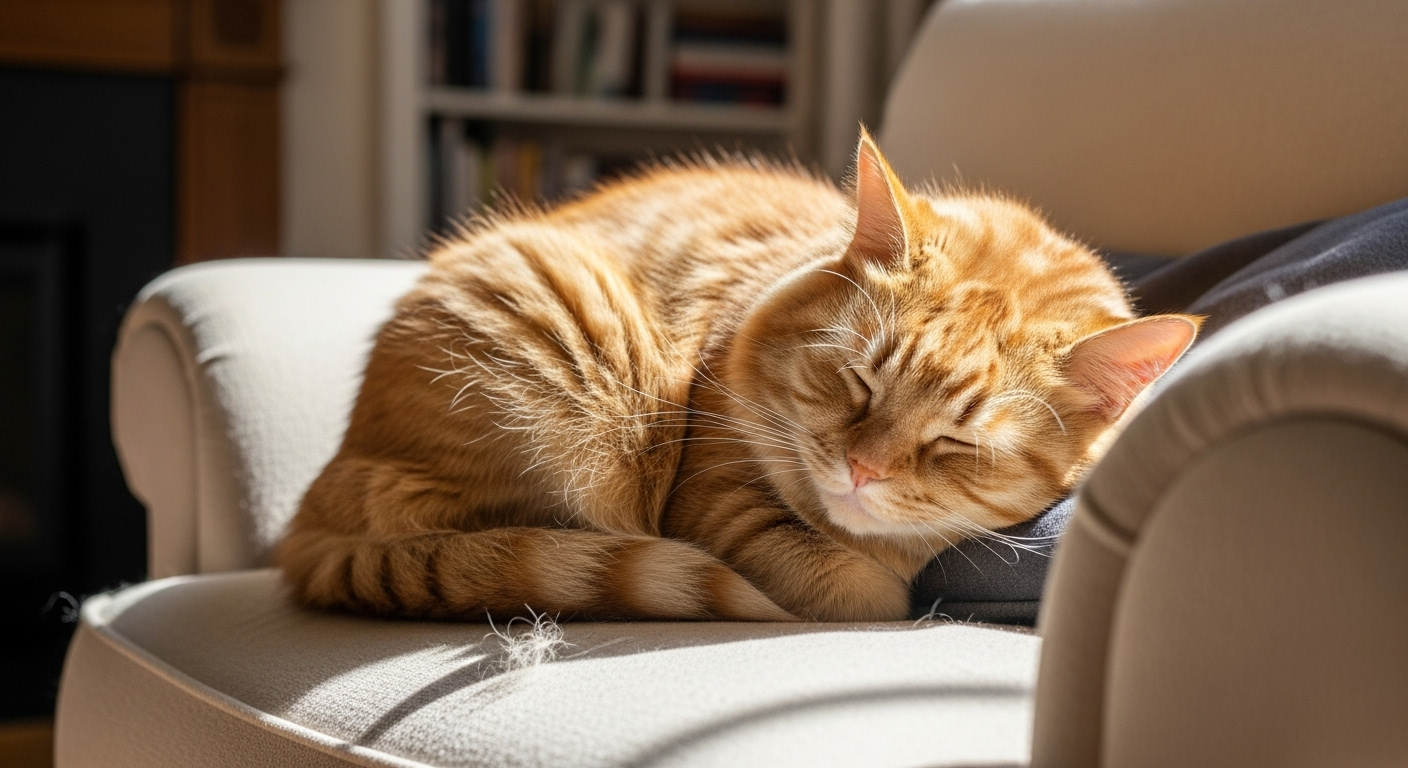
One evening, I walked in tired from a long commute, tossed my keys on the counter, and went to lie down. That’s when I smelled it. Luna had urinated right in the center of my pillow. The litter box was clean. She knew better.
My immediate reaction was anger. I thought, “Is she punishing me for leaving her? Is this revenge?”
The Science: I consulted a feline behaviorist, and she dropped a truth bomb that changed everything: Cats do not feel spite. Their brains don’t process complex emotions like “revenge” or “grudges.”
- So, why the bed? The bed smells the most like me. When a cat is in a state of high anxiety, they seek out the scent of their protector. By urinating on my pillow, Luna wasn’t trying to ruin my day; she was trying to mix her scent with mine to create a “shared scent” barrier that made her feel safe. It was a self-soothing mechanism, not a spiteful one.
2. The Signs: Is Your Cat Suffering in Silence?
It isn’t always as obvious as a bathroom accident. Looking back, I realized I missed several subtle red flags that my cat was struggling to cope alone:
- The “Velcro” Cat: The second I walked in the door, Luna would attach herself to my leg. She followed me to the kitchen, the couch, and even the bathroom. She was terrified that if she let me out of her sight, I would vanish again.
- The Hunger Strike: I noticed her food bowl was untouched when I got home. She wouldn’t eat all day, but as soon as I returned, she would gorge herself until she threw up. She was too anxious to eat alone.
- Over-Grooming: She started licking her belly incessantly, to the point where she had a bald patch. This is a classic OCD-like behavior triggered by stress.
3. How We Fixed It: Healing Instead of Punishing
Realizing that shouting would only make her anxiety worse, I completely changed my approach. Here is the 3-step protocol that actually worked for us:
A. Desensitizing the “Trigger” Sounds
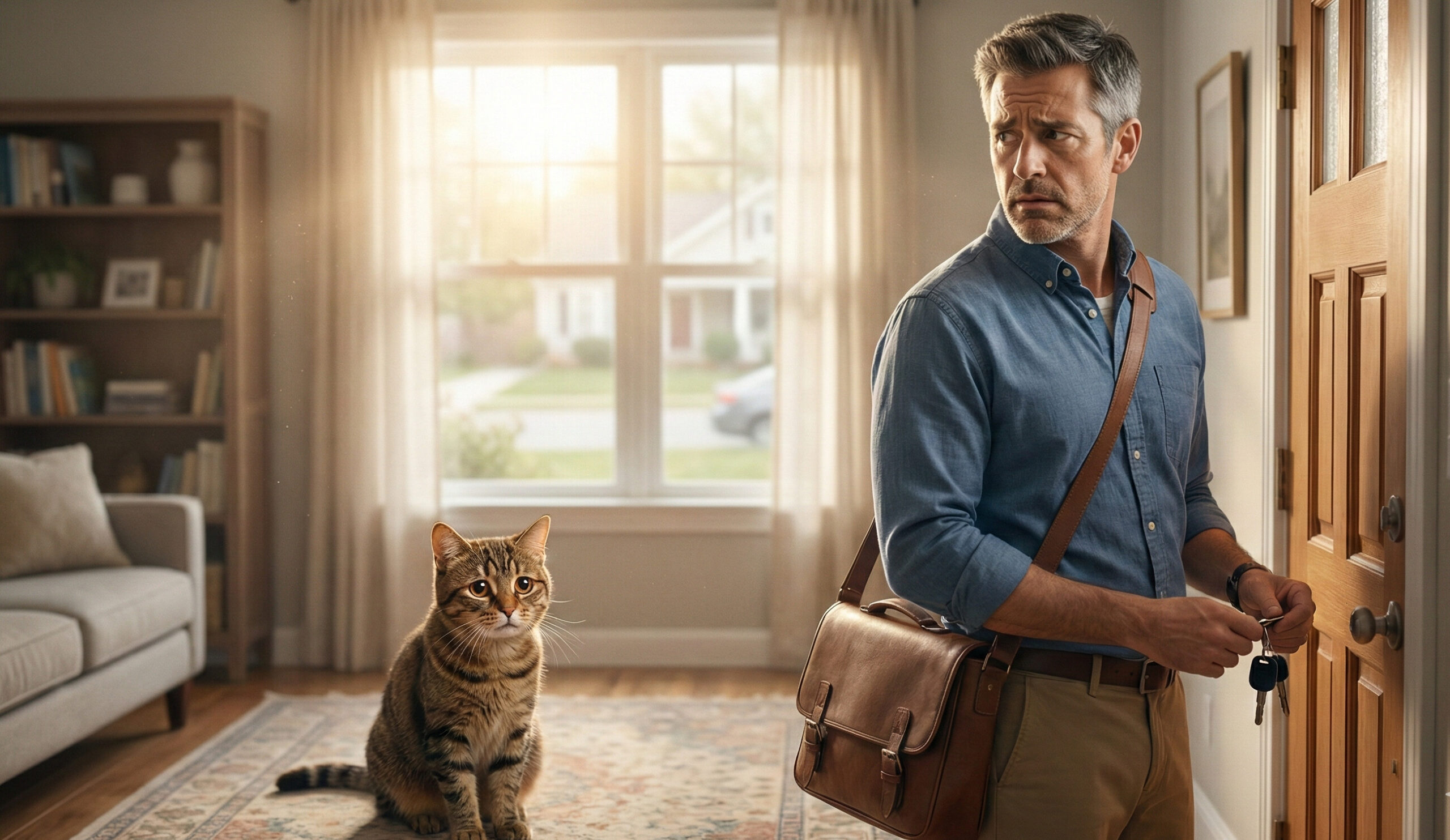
Cats are masters of pattern recognition. Luna knew the sequence: Shoes on -> Jacket on -> Keys jingle -> Dad disappears. The sound of keys alone was enough to make her heart race.
- What I did: On weekends, I would pick up my keys, walk to the door… and then go sit on the couch and watch TV. I’d put my shoes on… and then take them off to cook dinner.
- The Result: After a few weeks, the “departure cues” lost their power. She learned that hearing keys didn’t always mean I was leaving forever.
B. Boredom is the Enemy
A bored cat is an anxious cat. I needed to keep her brain busy while I was gone.
- Puzzle Feeders: I stopped putting dry food in a bowl. Instead, I used treat-dispensing balls and puzzle toys. She had to “hunt” and work for her lunch, which burned off nervous energy.
- “Cat TV” & Music: I started leaving a playlist of “Calming Music for Cats” (low-frequency classical piano) on while I was out. It filled the silence so every creak of the house didn’t startle her.
C. The “Cool” Goodbye
This was the hardest part for me. I used to hug her and say, “Bye Luna! Be a good girl! I’ll miss you!” in a high-pitched baby voice before leaving.
- The Science: Making a big scene spikes the cat’s energy and anticipation, making the sudden silence when the door closes even more shocking.
- What I do now: 10 minutes before I leave, I ignore her. I pack my bag calmly and slip out the door like a ghost. No goodbyes. When I come home, I wait until I’ve taken off my shoes and she has calmed down before I say hello. It normalizes the process.
Conclusion: Patience is the Key
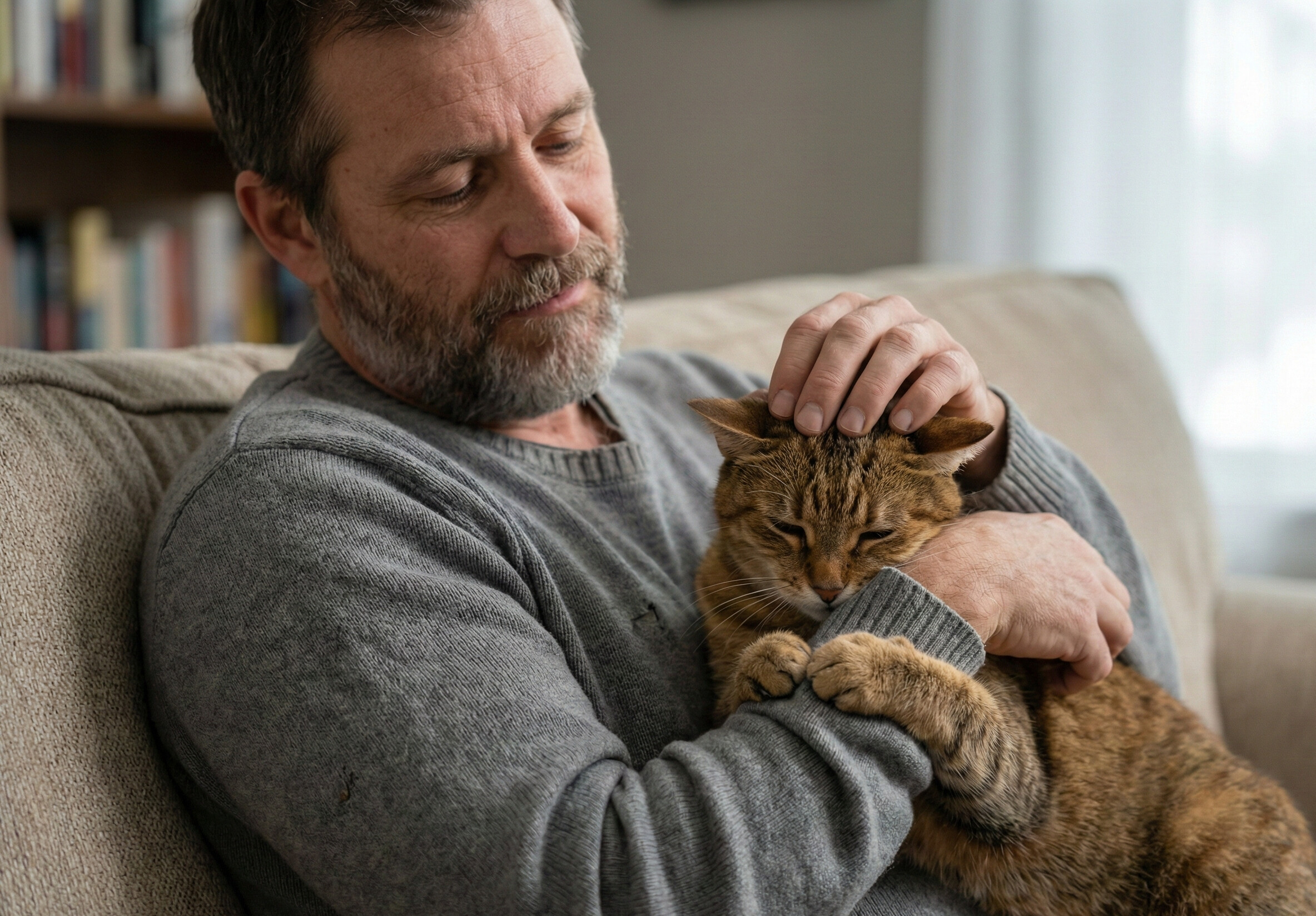
Separation anxiety doesn’t vanish overnight. It took us about three months to get to a point where I could leave without worrying about my bedsheets.
If you are dealing with this, please don’t give up on them. That “bad” behavior is actually a compliment in disguise: They love you so much that their world feels unsafe without you.