
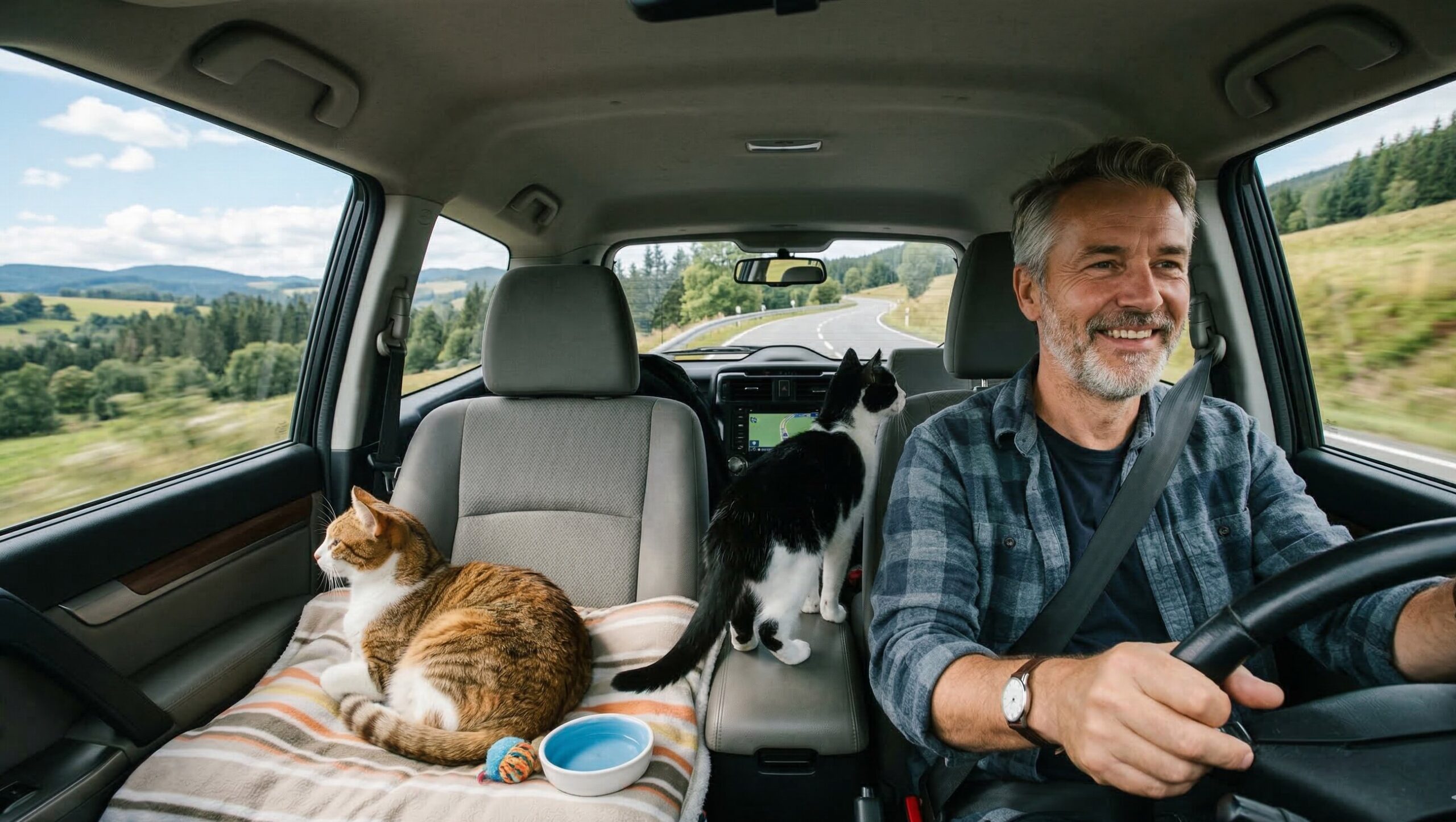
The secret to a successful experience road tripping with cats lies in solving two biological puzzles: the gastric emptying window and the vestibular-ocular mismatch. To prevent the inevitable cycle of yowling and vomiting, you must implement a strict 8-hour fasting protocol prior to departure and create a “visual blackout” within the carrier. When I first started traveling with my cats, including my adventurous but initially car-sick girl Luna, I realized that a cat in a moving vehicle is a biological system in crisis. By controlling the timing of their meals and the frequency of their sensory inputs, you can transition your cat from a state of “fight or flight” to a calm, observant passenger.
The Biological Reality of Feline Motion Sickness
Motion sickness in felines is not merely a “weak stomach”; it is a neurological conflict that triggers a primitive survival response. As an owner of multiple cats, I’ve seen firsthand how a 10-minute drive to the vet can look like a medical emergency if this conflict isn’t managed.
The Vestibular-Ocular Mismatch
The primary trigger for nausea during road tripping with cats is the “mismatch” between the inner ear and the eyes. The vestibular system in a cat’s inner ear—highly evolved for balance during high-speed hunts—detects every vibration, turn, and acceleration of the car. However, if the cat is looking at the stationary walls of a carrier, their eyes report to the brain that they are standing still. According to the Journal of Feline Medicine and Surgery, this sensory disconnect is interpreted by the feline brain as the ingestion of a neurotoxin. The brain’s logical response? Triggering the emetic center to expel the “poison,” resulting in vomiting.
The Cortisol Spike and Stress-Induced Ptyalism
Beyond nausea, the sheer “alien” nature of a car—the low-frequency engine rumble and the smell of exhaust—triggers a massive release of cortisol. In my house, when Luna gets stressed, she begins ptyalism (excessive drooling). Biologically, this happens because the sympathetic nervous system is prepping for a “threat.” This drooling isn’t just a mess; it’s a sign of extreme autonomic arousal. Understanding that your cat is having a physical, not just emotional, reaction is the first step toward empathy and a solution.
The Science of the 8-Hour Feeding Protocol
If the stomach is empty, the “vomit reflex” has no fuel. Managing the timing of the last meal is the most effective physical intervention a cat owner can make.
Gastric Emptying and the Fasting Window
Veterinary studies on feline physiology indicate that a standard meal takes approximately 6 to 8 hours to move from the stomach into the small intestine. For any road trip, I pull all food bowls exactly 8 hours before we hit the road. This ensures that even if Luna experiences a vestibular mismatch, her stomach is physically empty. Critics often worry about “starving” their cats, but felines are metabolically designed to handle intermittent fasting. Their liver’s glycogen stores are more than sufficient to maintain stable blood glucose for a day-long journey.
The “Hydration Preload” Strategy
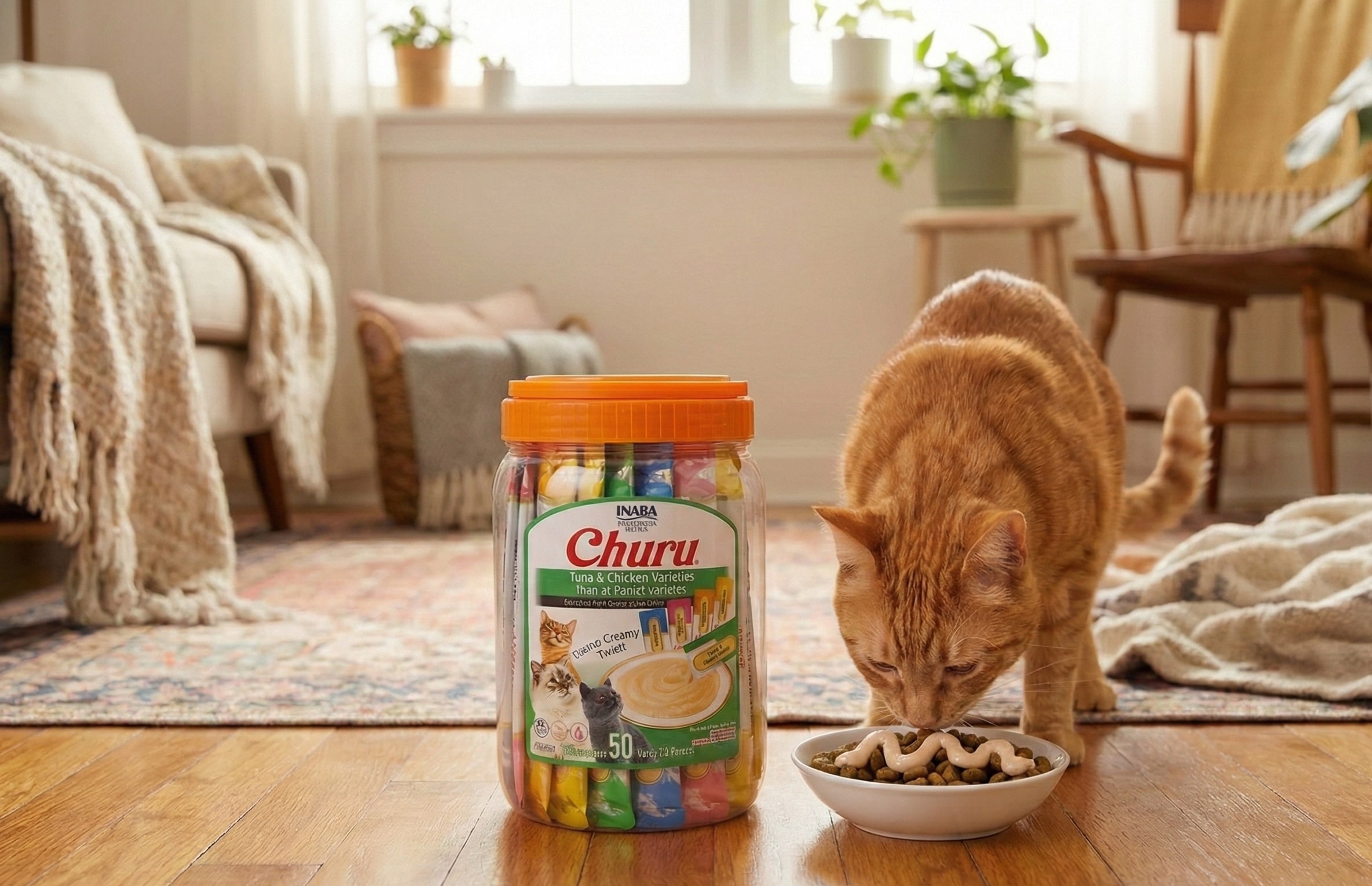
While food is restricted, dehydration is a major stressor that can lead to lethargy and long recovery times after the trip. My personal strategy is the “Hydration Preload.” Two hours before departure, I offer a small amount of low-sodium chicken broth or a liquid treat like Churu. This provides essential electrolytes and moisture that the cat can process before the motion sickness triggers. During the actual drive, I never leave water in the carrier (it just spills and creates more stress); instead, I offer a few laps of water during our scheduled stops every 3 hours.
Neurochemical Stress Reduction: Beyond the Carrier
Once the stomach is managed, you have to address the “territorial panic” that cats feel when they are removed from their home.
Pheromones and the Vomeronasal Response
Cats map their world through scent. When we go road tripping with cats, we are effectively stripping them of their “scent-identity.” I use synthetic F3 facial pheromones (Feliway) to bridge this gap. These molecules are detected by the Jacobson’s organ (Vomeronasal organ) in the roof of the cat’s mouth. This sends a direct neurochemical signal to the amygdala—the brain’s fear center—telling the cat that this new space is “safe.” I spray the carrier 15 minutes before Luna goes inside to let the alcohol base evaporate, leaving only the “calm” signals behind.
The “Safe Den” and Auditory Masking
In the wild, a cat’s best defense is invisibility. A cat in a transparent carrier on a car seat feels exposed to every “predator” (other cars, trucks, wind). I solve this by covering three sides of the carrier with a thick, dark towel that smells like home. This creates a “Safe Den” effect, physically blocking the visual motion that causes the vestibular mismatch. Additionally, I play “cat-specific music”—tracks designed with tempos that match a feline’s resting heart rate and frequencies that mimic purring. This masks the low-frequency road noise that Luna finds so distressing.
| Action Item | When to Perform | Biological Benefit | Priority |
|---|---|---|---|
| Pull Food Bowls | 8 Hours Pre-Departure | Ensures empty stomach; prevents vomiting. | Essential |
| Pheromone Spray | 15 Mins Pre-Departure | Triggers amygdala “calm” response. | Recommended |
| Visual Blackout (Towel) | Duration of Trip | Resolves vestibular-ocular mismatch. | Essential |
| Hydration Check | Every 3 Hours (Stops) | Prevents stress-induced dehydration. | Essential |
| Portable Litter Box | During Stops Only | Maintains hygiene and lowers territorial stress. | Recommended |
Logistics of the “Litter Box Break”
One of the most common questions I get at Cattrove is: “Where do they go to the bathroom?” Handling feline waste on a road trip requires a strategic approach to prevent accidents and maintain hygiene.
The Portable Box Setup
Most healthy adult cats can comfortably “hold” their bladder for 6 to 8 hours due to their desert-evolved physiology. However, on a long road trip, you must provide an option. I keep a collapsible, waterproof fabric litter box in the footwell of the back seat. During our 3-hour stops, I park in a quiet area, close all the car doors (essential!), and let Luna out of her carrier to stretch and use the box.
Behavioral Cues for “Emergency” Stops
As an owner, you’ll learn your cat’s “pre-accident” signs. If Luna begins a specific, high-pitched “merow” or starts digging at the floor of her carrier, it’s an immediate signal to pull over. Providing this outlet not only prevents a mess but also significantly lowers the cat’s overall anxiety levels, as they no longer feel the stress of “soiling their nest.”
Conclusion: Success is in the Silence
Road tripping with cats is an art of managing environmental variables. When you respect the 8-hour fasting window and mitigate the visual chaos of the road, you are speaking to your cat’s biology in a language they understand. My journey with Luna went from 20 minutes of constant yowling to peaceful naps on 6-hour drives, all because I stopped treating her like a dog and started respecting her needs as a mesopredator. Preparation is the bridge between a traumatic trip and a successful adventure.