

I still vividly remember that sound. It was 2:00 AM, the house was dead silent, and then it started: Thump, thump, thump.
It was the sound of Luna’s back leg hitting the hardwood floor as she scratched her neck furiously. She wasn’t just scratching an itch; she was scratching in desperation. By morning, I found raw, red patches of skin where her fur used to be. I felt completely helpless.
If you are reading this, you probably know that sinking feeling in your stomach when you see your “fur baby” in distress. I spent months navigating vet visits, confusing labels, and sleepless nights before I finally cracked the code.
It was this exhausting journey that actually inspired me to start CatTrove, a space where I could document what actually works for modern cat parents. Below is the breakdown of how I finally got Luna’s allergies under control—hopefully, it saves you the trial and error I had to go through.
The “Indoor Cat” Myth: Understanding Flea Allergy Dermatitis
When my vet first asked, ” is she on a monthly flea preventative?” I almost laughed. “No,” I said confidently. “Luna is strictly an indoor cat. We live in an apartment. There’s no way she has fleas.”
I was wrong. And it was a rookie mistake.
My vet explained Flea Allergy Dermatitis (FAD). For a cat with this allergy, it doesn’t take an infestation to cause a reaction. Just one single flea bite is enough. The saliva from that one bite can send a sensitive cat into a scratching frenzy that lasts for two weeks. A flea could have easily hitched a ride on my jeans or shoes from the outside world.
What I did: I stopped guessing and started a strict regimen. I applied a quality topical treatment (like Revolution Plus or Frontline Gold) every single month, year-round. Even in winter.
My advice to you: Before you spend hundreds of dollars on allergy testing or fancy food, rule out the fleas first. It is the most common cause and the easiest to fix.
The Food Detective: Identifying Cat Food Allergy Symptoms & Triggers
Once the flea treatment was sorted, the scratching reduced, but she was still over-grooming her belly. The next suspect was her bowl.
I was shocked to learn that chicken, beef, and fish are the most common allergens for cats—not grains or corn, as marketing often leads us to believe.
I started an Elimination Diet. Honestly, this was the hardest part. I had to find a “Novel Protein”—a meat source Luna had never eaten before.
What I did:
- I switched her to a wet food formula based on Rabbit (Venison or Duck are good options, too).
- I became obsessive about reading labels. You would be amazed at how many “Salmon Recipe” kibbles list “Chicken Fat” as the third ingredient. I had to cut all of that out.
- Zero treats. This was tough because she begged, but even one normal treat could ruin weeks of progress.
My advice to you: If you suspect a food allergy, you have to be all-in. You need to stick to the new protein for at least 8 to 12 weeks to see real results. It takes time for the inflammatory proteins to leave their system. Be patient.
Related Post: The 7 Best Petsmart Grooming Alternatives for At-Home Pet Care
The Invisible Enemy: Managing Environmental Allergies in Cats
Even with the diet change, I noticed Luna would still get sneezy and itchy when spring hit, or right after I cleaned the house. Just like humans get hay fever, cats can suffer from Atopy (environmental allergies). Dust mites, pollen, and even fragrance were triggering her.
What I did:
- Ditched the Clay Litter: I realized the cloud of dust every time she dug in her litter box was irritating her skin and lungs. I switched to a low-dust tofu or wood-based litter.
- The Air Purifier: This was a total game-changer. I bought a HEPA air purifier and placed it right next to her favorite cat tree. It captures the dander, pollen, and dust floating around her sleep zone.
My advice to you: Look at what you use to clean your floors. Cats walk on the floor and then lick their paws. I switched to unscented, pet-safe laundry detergent for her bedding and avoided strong chemical floor cleaners.

Cat Skin Problems Solution: It’s About Management, Not Cures
The most important lesson I learned is that allergies are rarely “cured” 100%. It is a condition you manage.
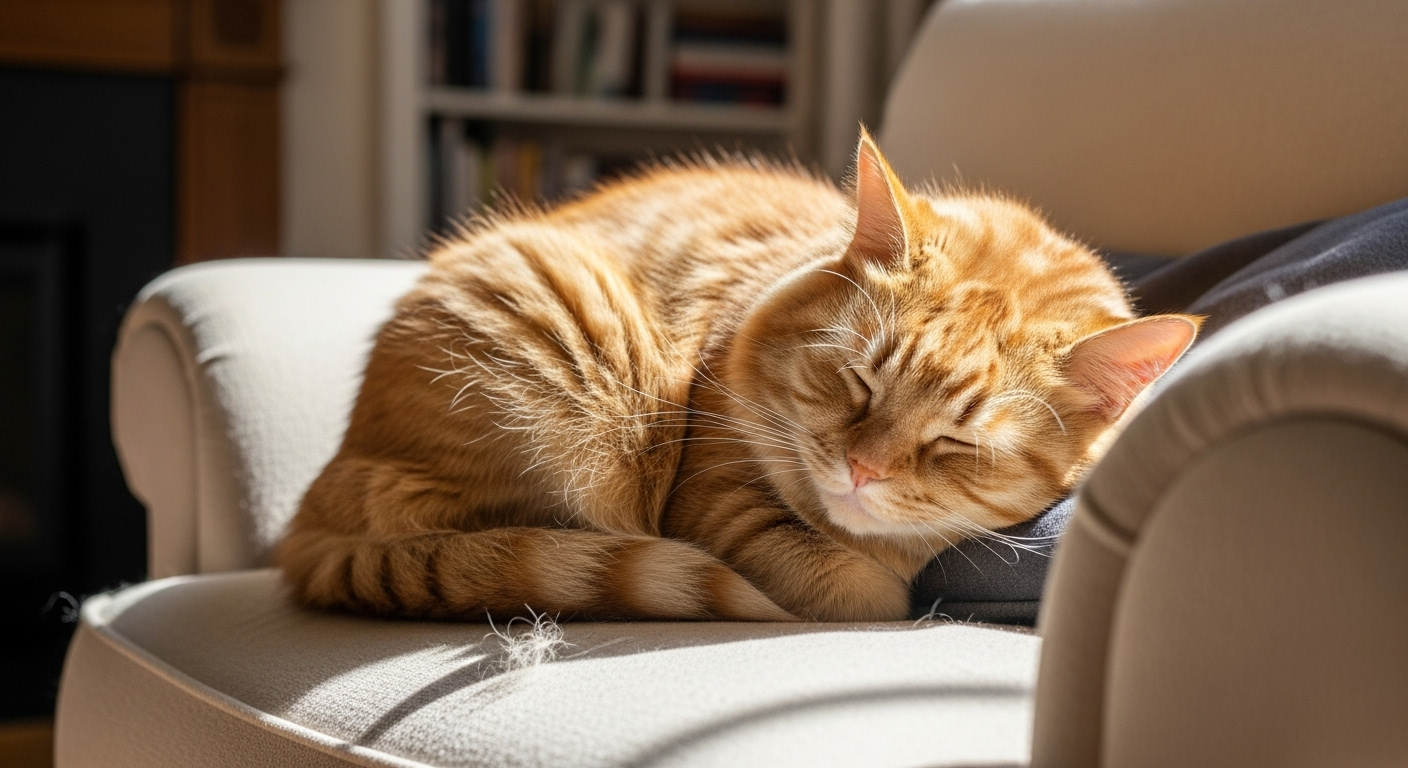
There are still days when Luna gets a bit itchy, especially during high-pollen seasons. When flare-ups get bad, I don’t hesitate to call the vet for help (sometimes a short course of Apoquel or a steroid shot is necessary to break the itch cycle). But most days? She is happy, fluffy, and sleeping peacefully without that dreadful thump-thump sound.
If you are in the thick of it right now, take a deep breath. Start with the fleas, move to the food, and check your environment. It’s a process, but seeing your cat comfortable again is worth every second of effort.
Frequently Asked Questions (FAQ)
While some antihistamines can be used for cats, you should never give human medication without an explicit dosage instruction from your veterinarian. Some formulations contain ingredients that are toxic to cats. Always call your vet first.
It’s not an overnight fix. It usually takes 8 to 12 weeks of a strict diet to see significant improvement in their skin and coat. If you cheat with treats halfway through, you often have to restart the clock.
Not necessarily. While some cats are allergic to grains, they are much more likely to be allergic to the protein (meat) in the food, such as chicken or beef. Focusing on a “Novel Protein” (like rabbit or duck) is usually more effective than just going grain-free.
Yes! sometimes “Psychogenic Alopecia” (stress-grooming) looks exactly like an allergy. If medical causes are ruled out, look into stressors like new pets, moving houses, or boredom.