
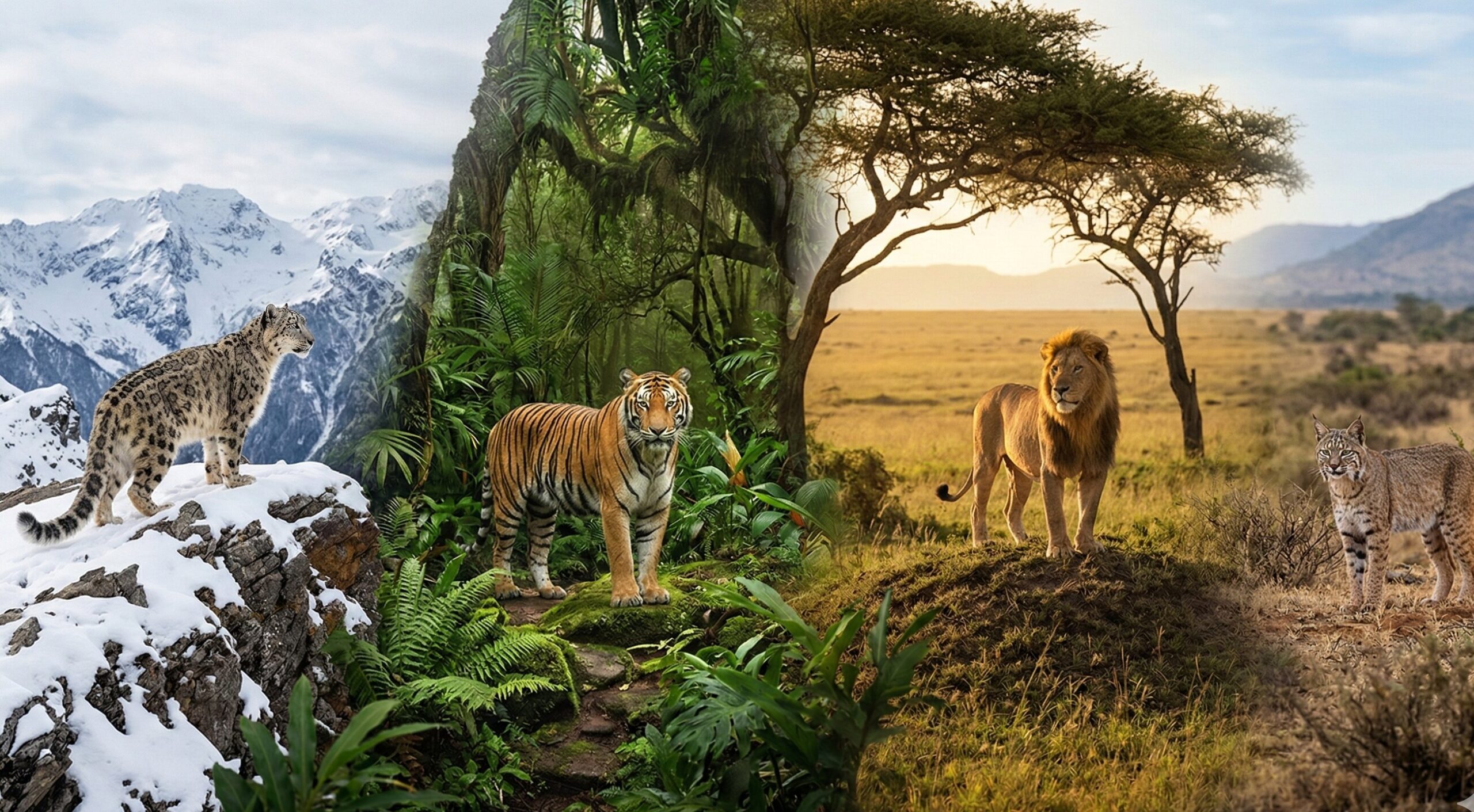
Wild cat species encompass over 40 diverse feline types within the Felidae family, ranging from the massive 600-pound Siberian Tiger to the diminutive 3-pound Black-footed Cat. These extraordinary predators are found across every continent except Antarctica. While they vary in size, coat patterns, and habitats, all wild cat species share a common lineage and the specialized hunting instincts that define the world’s most successful carnivores.
Whether you’re a fan of the big cats seen on National Geographic or you’re curious about the wild cousins of your tabby cat at home, understanding the diversity of the cat family is a fascinating journey. At Cattrove, we believe that knowing these wild species helps us better care for and appreciate our domestic companions.
What are the most famous wild cat species?
The most famous wild cat species are generally categorized into “Big Cats” (subfamily Pantherinae) like Tigers, Lions, and Jaguars, and “Small Cats” (subfamily Felinae) such as Cougars, Lynxes, and Bobcats. While the Big Cats are famous for their ability to roar and their massive size, the Small Cats are celebrated for their incredible agility, specialized adaptations, and their ability to purr—a trait they share with your domestic cat.
From the frozen tundras of Siberia to the scorching sands of the Sahara, these 15 species represent the pinnacle of feline evolution.
Top 15 Wild Cat Species: A Deep Dive
1. The Siberian Tiger (Panthera tigris altaica) – The Heavyweight King
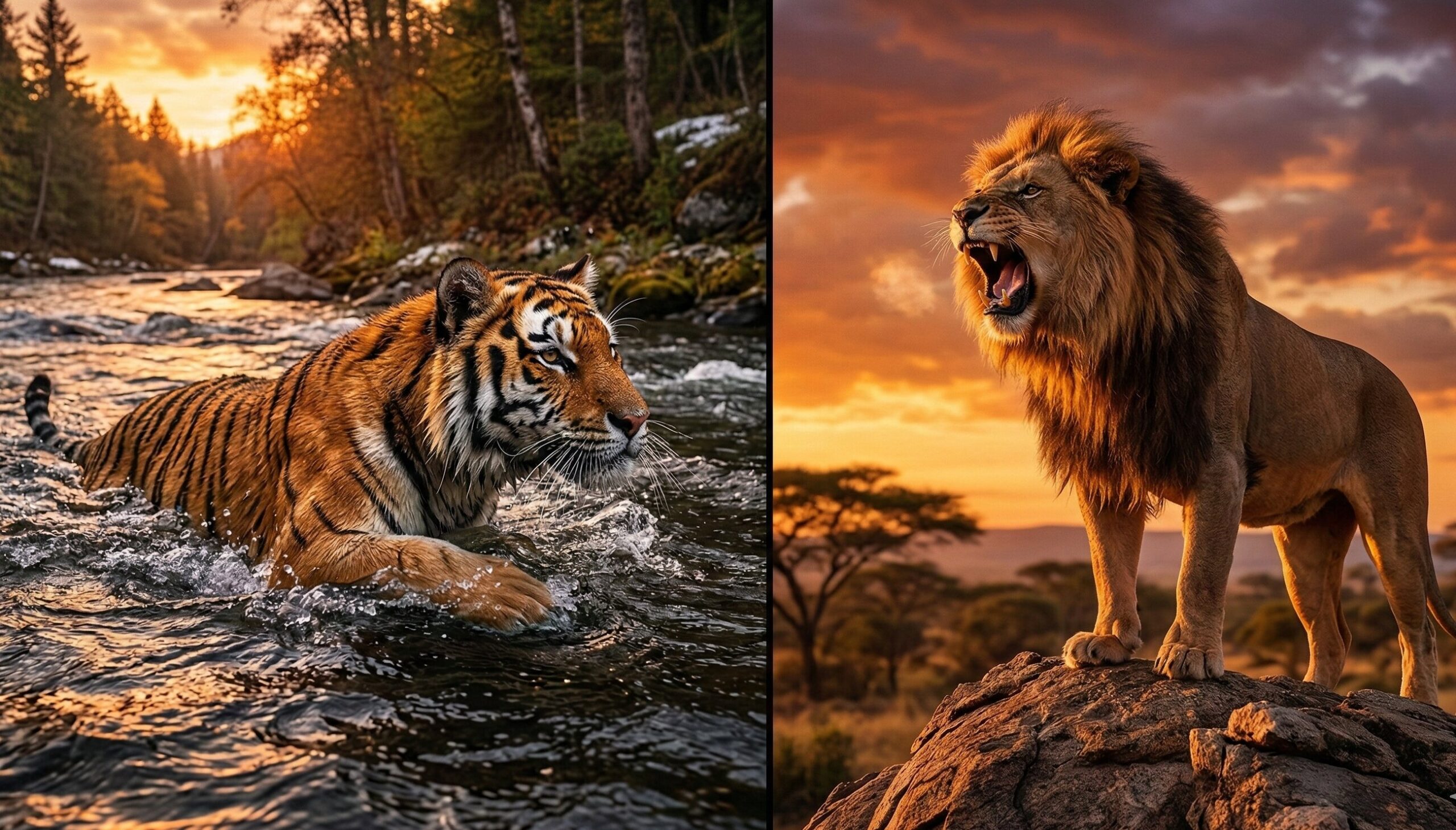
The Siberian Tiger (or Amur Tiger) is the largest of all wild cat species. A dominant male can weigh up to 660 lbs. Unlike most house cats, tigers are exceptional swimmers and actually enjoy being in the water to cool off or hunt.
- Unique Trait: They have the thickest fur of any tiger species to survive the brutal Russian winters.
- Habitat: Birch forests of Eastern Russia and Northern China.
2. The African Lion (Panthera leo) – The Social Monarch
Lions are the only truly social felids, living in family groups called “prides.” While the females are the primary hunters, the males are responsible for defending the pride’s territory.
- Unique Trait: A lion’s roar can be heard from 5 miles (8km) away. The darker a male’s mane, the healthier and more dominant he usually is.
- Habitat: Savannas and grasslands of Sub-Saharan Africa.
3. The Jaguar (Panthera onca) – The River Guardian
The Jaguar is the powerhouse of the Americas. It possesses the strongest bite force of all wild cat species relative to its size, capable of crushing turtle shells and even caiman skulls.
- Unique Trait: Their name comes from the indigenous word yaguar, meaning “he who kills with one leap.”
- Habitat: Rainforests and wetlands of Central and South America.
4. The Leopard (Panthera pardus) – The Stealth Master
Leopards are the ultimate opportunists. They are famous for their incredible strength, often dragging heavy prey high into trees to protect it from scavengers like hyenas or lions.
- Unique Trait: They are the most widely distributed big cat, surviving in everything from deserts to rainforests.
- Habitat: Across Africa and parts of Asia.
5. The Snow Leopard (Panthera uncia) – The Ghost of the Mountains
Often called the “Ghost of the Mountains,” these cats are masters of camouflage. They have massive paws that act as natural snowshoes and a long, thick tail used for balance on icy cliffs.
- Unique Trait: Snow Leopards cannot roar. They communicate through chuffs, mews, and growls.
- Habitat: Rugged mountains of Central Asia (Himalayas).
6. The Cougar (Puma concolor) – The Record Breaker
Despite their large size, Cougars are genetically part of the “Small Cat” subfamily. They hold the world record for the animal with the most names (Mountain Lion, Puma, Catamount, etc.).
- Unique Trait: They can leap 18 feet (5.5m) vertically in a single bound.
- Habitat: From the Canadian Yukon to the southern Andes.
7. The Cheetah (Acinonyx jubatus) – The Speed Demon
The Cheetah is the world’s fastest land animal, reaching speeds of 70 mph (112 km/h). Their bodies are built like racing cars, featuring an enlarged heart and lungs for maximum oxygen intake.
- Unique Trait: They are the only wild cats that cannot fully retract their claws, providing “running spikes” for traction.
- Habitat: Open plains of Africa and Iran.
8. The Eurasian Lynx (Lynx lynx) – The Forest Sentinel
Recognizable by the iconic black tufts on their ears, which act like hearing aids to detect prey. They are solitary and elusive forest dwellers.
- Unique Trait: Their vision is so sharp they can spot a mouse from 250 feet away.
- Habitat: Temperate forests of Europe and Siberia.
9. The Bobcat (Lynx rufus) – The American Local
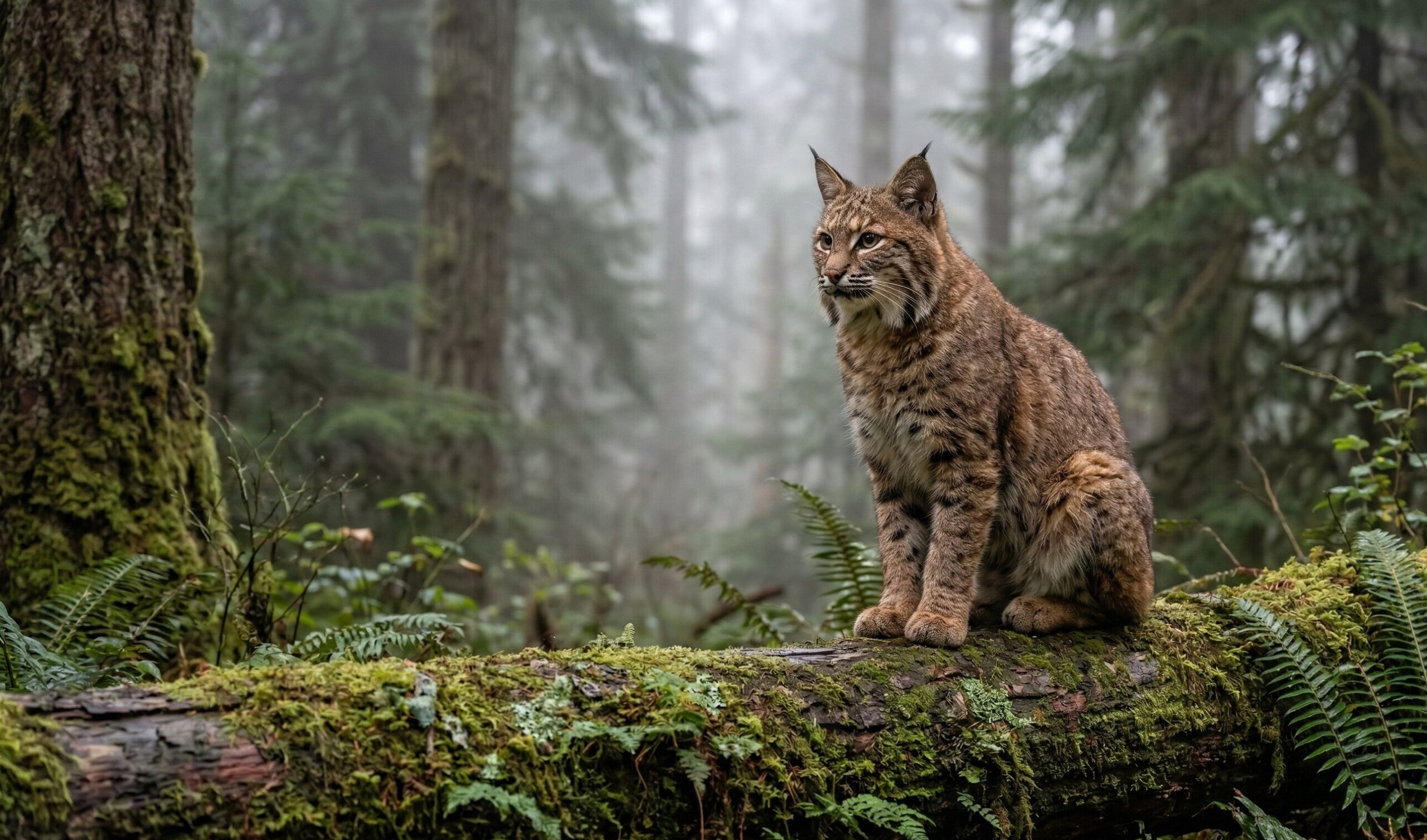
The Bobcat is the most common wild cat in the United States. About twice the size of a house cat, they are incredibly hardy and can survive in deserts, swamps, or snowy forests.
- Unique Trait: They are highly patient hunters, often sitting motionless for hours before pouncing.
- Habitat: Throughout North America (USA, Canada, Mexico).
10. The Clouded Leopard (Neofelis nebulosa) – The Tree Acrobat
Considered the “evolutionary link” between big and small cats. They have the longest canine teeth relative to body size of any living cat species.
- Unique Trait: They can climb down tree trunks head-first, a skill shared by very few felids.
- Habitat: Dense rainforests of Southeast Asia.
11. The Serval (Leptailurus serval) – The Radar Hunter
With the longest legs of any cat relative to its size and massive ears, the Serval looks like a miniature cheetah with bat-like ears.
- Unique Trait: Their ears are so sensitive they can hear rodents scurrying underground.
- Habitat: Wetlands and savannas of Africa.
12. The Ocelot (Leopardus pardalis) – The Artist’s Muse
Known for having perhaps the most beautiful coat in the animal kingdom, the Ocelot was once the muse of artist Salvador Dalí, who kept one as a pet.
- Unique Trait: They are almost entirely nocturnal and are excellent swimmers.
- Habitat: Tropical forests from Texas to Argentina.
13. The Caracal (Caracal caracal) – The Bird Catcher
Caracals have 20 different muscles in each ear, allowing them to rotate their ears like satellite dishes to pinpoint prey.
- Unique Trait: They are “high jumpers,” capable of leaping 10 feet into the air to swat birds mid-flight.
- Habitat: Dry regions of Africa and the Middle East.
14. The Black-footed Cat (Felis nigripes) – The Tiny Terror
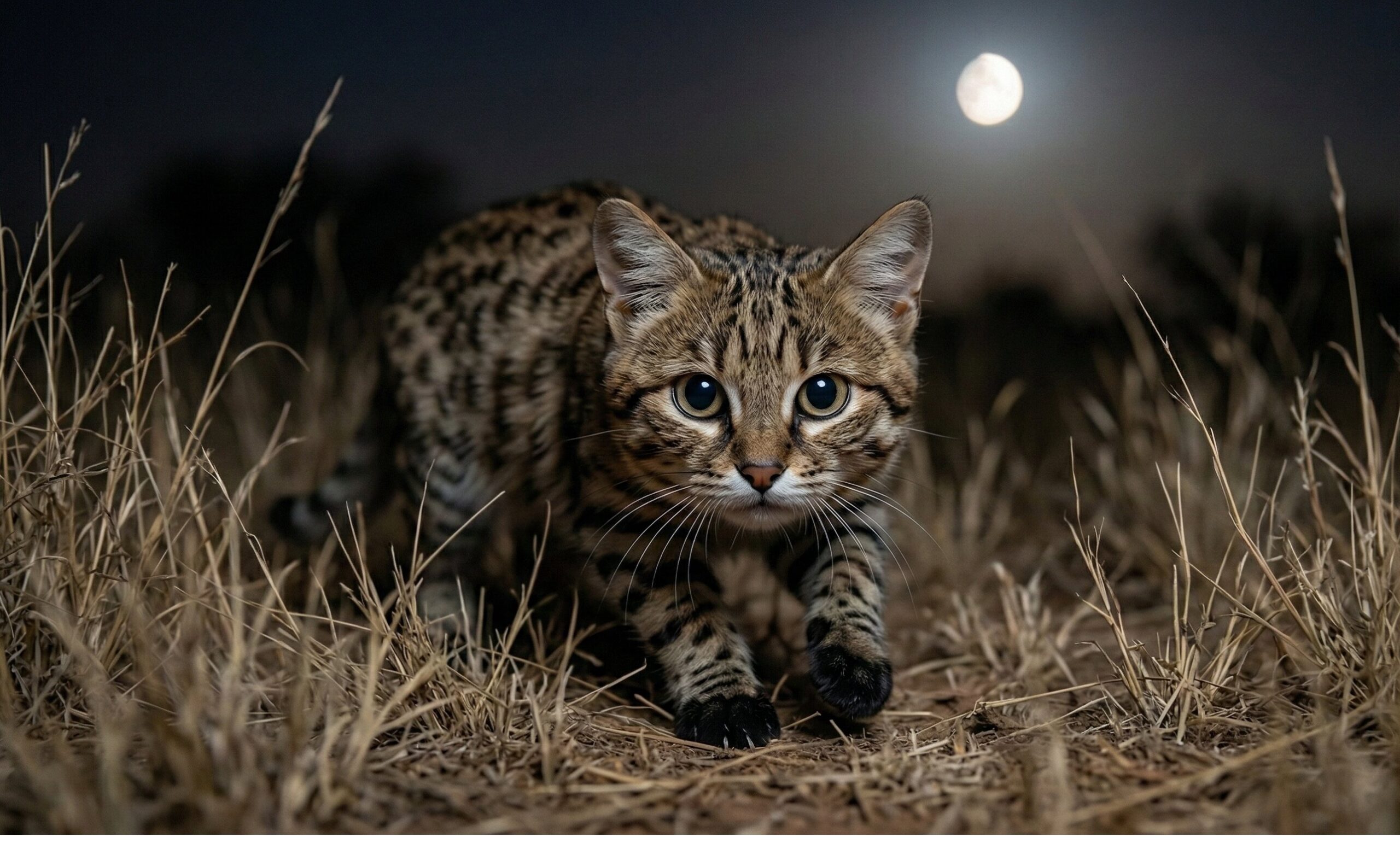
Don’t let the cute face fool you. This is the deadliest cat on Earth. With a 60% hunting success rate, it kills more prey in one night than a leopard does in a month.
- Unique Trait: An adult weighs only 2-4 lbs but can travel 20 miles in a single night hunting.
- Habitat: Arid deserts of Southern Africa.
15. The Sand Cat (Felis margarita) – The Desert Nomad
The only cat found primarily in true deserts. They have thick fur on the soles of their feet to protect them from the scorching sand.
- Unique Trait: They can survive for months without drinking water, getting all their moisture from their prey.
- Habitat: Deserts of North Africa and Central Asia.
Comparison of Key Wild Cat Species
| Species | Weight (Avg) | Conservation Status | Notable Feature |
|---|---|---|---|
| Siberian Tiger | 400 – 660 lbs | Endangered | Largest cat species |
| Cheetah | 75 – 140 lbs | Vulnerable | Fastest land animal (70 mph) |
| Bobcat | 15 – 35 lbs | Least Concern | Most adaptable US wild cat |
| Black-footed Cat | 2 – 4 lbs | Vulnerable | Deadliest hunter (60% success) |
Why Wild Cat Conservation Matters
Every wild cat species plays a vital role as an “apex predator.” When we protect these cats, we protect the entire ecosystem. Unfortunately, many species like the Tiger and Snow Leopard are facing extinction due to habitat loss and poaching.
At Cattrove, we encourage our community to support wildlife organizations. By understanding the wild, we learn to cherish the “little tigers” living in our own homes.
You might also like: Felids Meaning: What Is the Cat Family?