
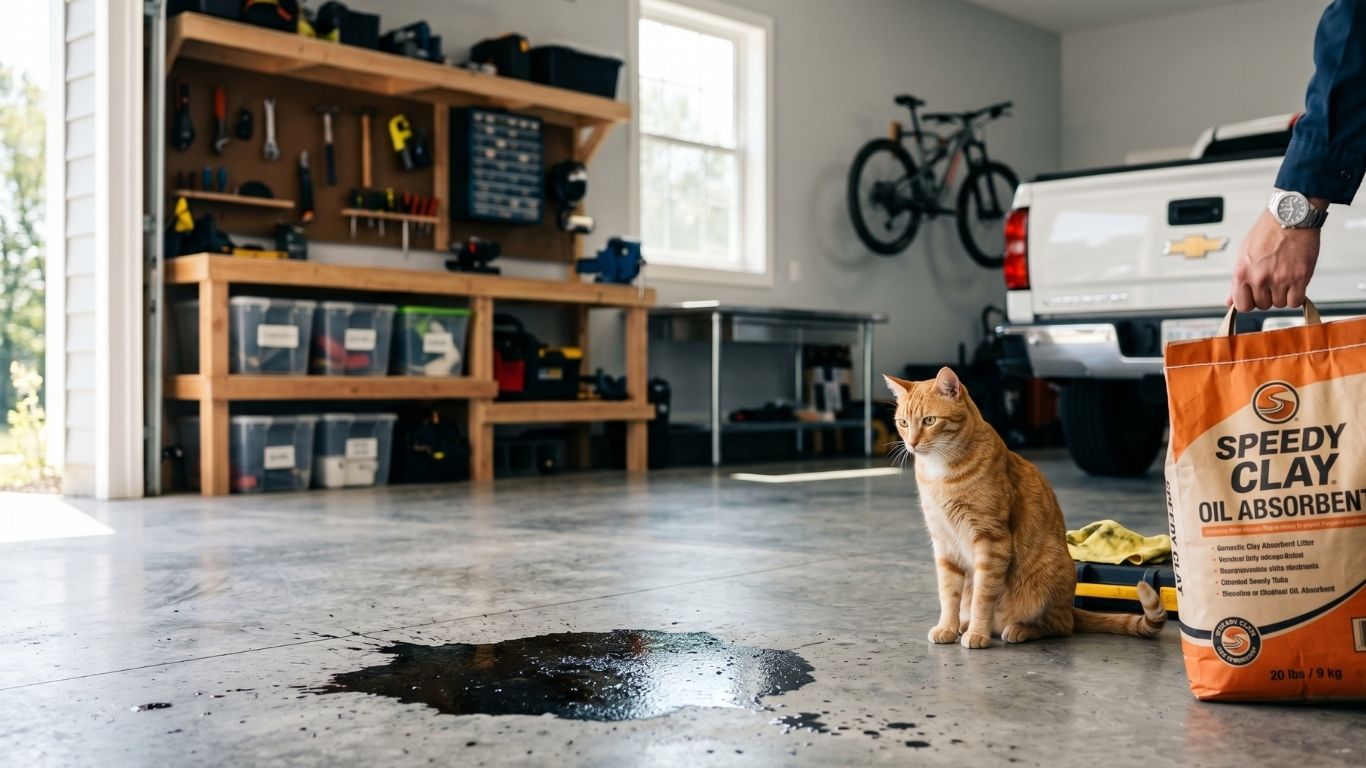
If you share your home with a cat, you’re already sitting on one of the most effective, low-cost oil spill solutions ever discovered. Whether it’s a slow leak from your SUV or a messy DIY oil change, that dark, shimmering puddle on your garage floor is a headache. It’s a slipping hazard, it ruins your “curb appeal,” and if you’re part of an HOA (Homeowners Association), it could even lead to a fine.
But will cat litter absorb oil effectively? The answer is a resounding yes, but there is a specific “pro technique” you need to follow to ensure you don’t leave a permanent ghost stain on your concrete.
Why Cat Litter is an Oil-Cleaning Powerhouse
The magic lies in the mineral composition of traditional litter. Most inexpensive cat litters are made from clay minerals like Bentonite or Fuller’s Earth.
- The Science of Adsorption: Unlike a sponge that pulls liquid into its center, clay particles work through adsorption. The oil molecules “stick” to the massive surface area of the clay granules.
- The Convenience Factor: Instead of rushing to Home depot for industrial absorbents, you can just grab that 40lb bag of Tydy Cats or a generic brand from Costco. It’s the ultimate “life hack” for pet owners.
Which Type of Litter Should You Use?
Choosing the wrong litter can turn a simple spill into a sticky, muddy disaster. If you’re curious about other uses for your pet supplies, check out our comprehensive guide to cat litter types.
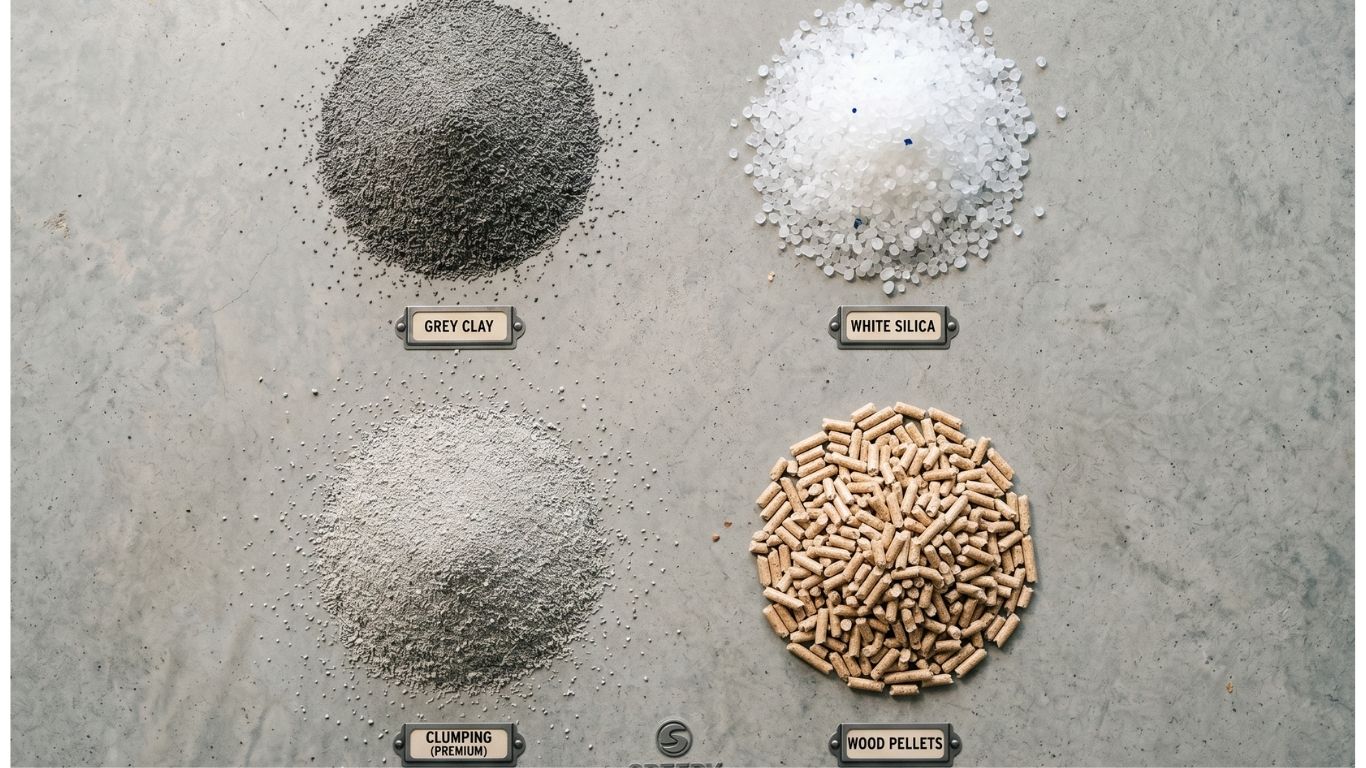
| Litter Type | Effectiveness | Why? |
|---|---|---|
| Non-Clumping Clay | Best Choice | It stays solid, provides traction, and has the best “pulling” power for hydrocarbons. |
| Clumping (Scoopable) | Avoid | Designed to turn into “cement” when wet. It will create a gooey, oily sludge that is nearly impossible to scrape off. |
| Silica Gel (Crystals) | Fair | Great for moisture and odors, but the pores are often too small for thick motor oil. |
| Organic (Pine/Corn) | Good | Eco-friendly, but very light. It can blow away in a breeze or track oil into the house if it sticks to your shoes. |
The “Grinding Masterclass”: Step-by-Step Oil Removal
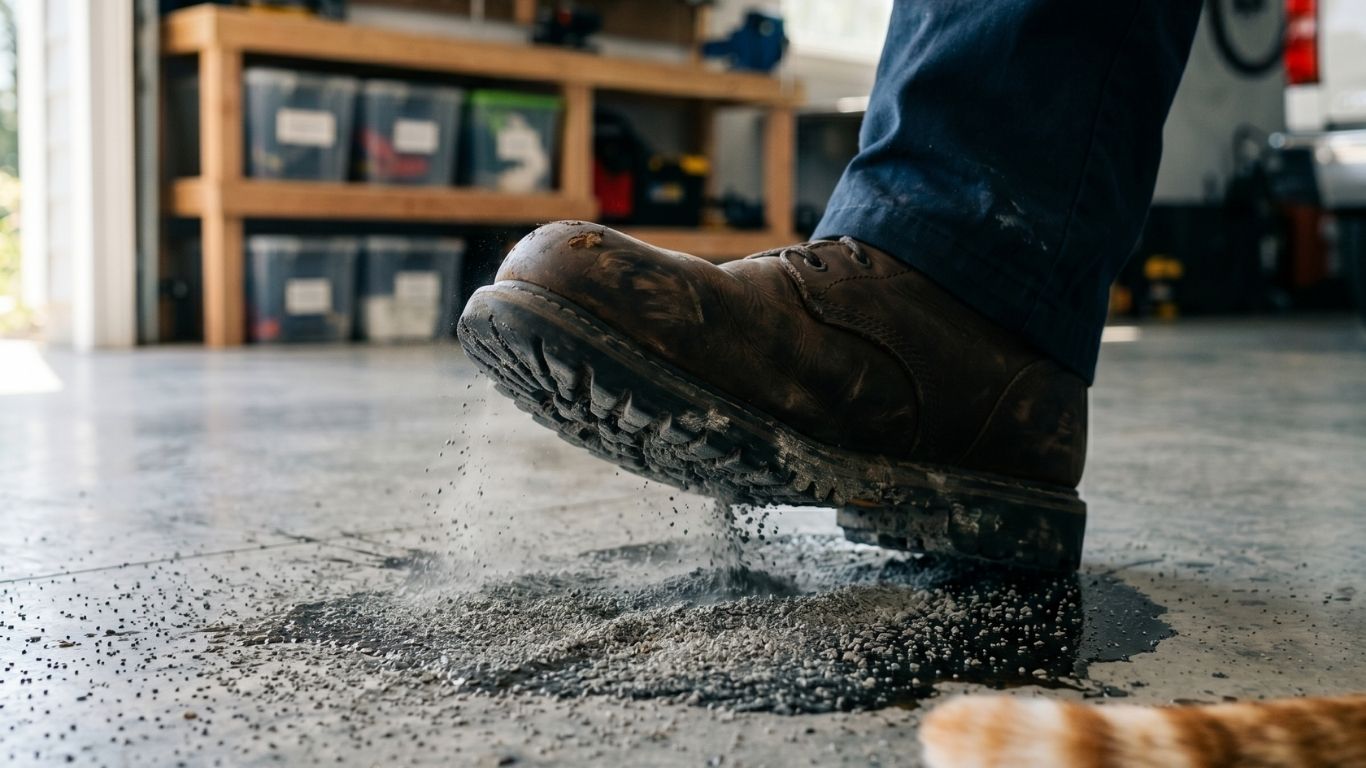
Don’t just pour and walk away. To truly “pull” oil out of porous concrete, you need to break down the surface tension. Follow this expert workflow (and remember to keep your garage safety kit handy):
1. The Heavy Pour
Cover the spill with a 1-to-2-inch layer of non-clumping clay litter. Ensure you overlap the edges of the spill by at least two inches to prevent the oil from creeping outward under the litter.
2. The “Grinding” Secret
This is the step most people miss. Large clay granules can’t reach deep into the microscopic “valleys” of your concrete floor.
- The Pro Move: Use a heavy brick, a scrap 2×4, or the heel of your work boot to pulverize the litter into a fine powder directly on top of the oil. This creates a “clay flour” with massive surface area that acts like a vacuum, drawing oil out of the pores.
3. Let it Dwell
Patience is key. For a fresh spill, 30 minutes might do the trick. For old, set-in stains, let that pulverized powder sit overnight. You will know it’s working when the powder turns a dark, heavy gray.
4. The “Dawn” Finish
Sweep up the saturated powder. You will likely see a faint residue. Squirt some Dawn Platinum Dish Soap (the gold standard for degreasing in the US) on the area, add hot water, and scrub with a stiff nylon brush. Rinse thoroughly, and the stain should be gone.
Important Safety Warnings for You and Your Pets
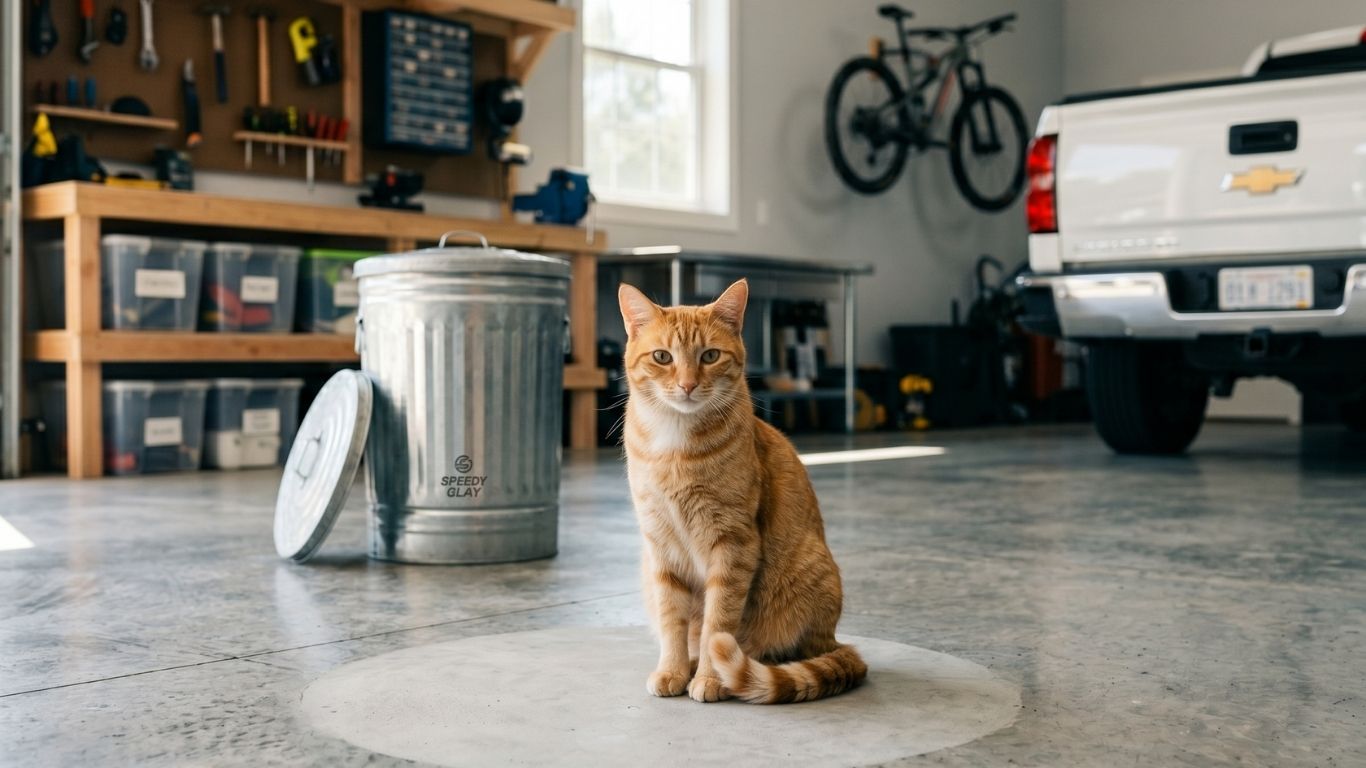
Using cat litter is smart, but it’s not without risks:
- Silica Dust Risk: Pulverizing clay litter releases crystalline silica dust. Inhaling this can lead to silicosis over time. Always wear a mask (N95) when grinding or sweeping, and keep your “fur-babies” inside during the process. Learn more about respiratory safety in the workshop.
- Abrasive Residue: Clay dust is essentially grit. If it tracks into your engine or precision tools, it can act like sandpaper and cause internal damage.
- Spontaneous Combustion: If you are cleaning up drying oils (like Linseed oil, Tung oil, or vegetable oil used in cooking), the oxidation process can generate heat. According to the National Fire Protection Association (NFPA), oily rags and absorbents are a leading cause of spontaneous fires. Always soak oil-soaked litter in water before disposal.
US Regulations: How to Dispose of the Mess
You can’t always just toss oily litter into the bin. US environmental laws are strict:
- The “Paint Filter Test” (EPA Rule): According to the EPA’s Method 9095B, if you put the litter in a filter and oil drips out, it is considered a hazardous liquid. You must add enough litter until it is “dry” to the touch.
- State Rules: If you live in California, oil-soaked absorbents are often treated as Hazardous Waste. In states like Texas or Florida, you can usually put it in the household trash if it is fully absorbed and non-leaking. Check your local Sanitation Department website for your zip code’s specific rules.
FAQ: Will Cat Litter Absorb Oil?
Q: Can I use used cat litter to clean oil? A: No. Used litter contains moisture and organic waste that reduces its ability to adsorb oil. It’s also unsanitary. Always use fresh, dry litter.
Q: Does cat litter work on old oil stains? A: It can help, but for stains that are months old, you will need to use the “Grinding Masterclass” technique combined with a commercial concrete degreaser.
Q: Is cat litter the same as “Oil-Dri”? A: Essentially, yes. Many industrial “Oil-Dri” products are just repackaged non-clumping clay (Fuller’s Earth), the same stuff found in budget cat litter.
Conclusion
Your cat’s litter box isn’t just for the “Boss” of the house—it’s your secret weapon for a clean garage. By choosing the right non-clumping clay and using the grinding technique, you can save money, protect your home’s value, and avoid HOA fines.
Disclaimer: For massive industrial spills or commercial accidents, always contact a professional hazardous waste disposal service. Visit the EPA’s Used Oil Management Page for more information.